Skip to content

Desert Peach
(Prunus andersonii)

Host Plant: Pale Swallowtail (Papilio eurymedon), Eastern Tiger Swallowtail (Papilio glaucus), Coral Hairstreak (Satyrium titus), Herni’s Elfin (Callophrys henrici), and the Luna moth (Actias luna)

Nectar Plant: many insects including other butterflies, bees, and wasps.

Food Source: Birds and mammals

Flower Color: pink to dark pink

Growth Habit: shrub growing from 3 to 10 feet

Range in North America: California and Nevada

Exposure: Prefers full sun to part shade

Hardiness: Zones 5-9

Flowering Time: March to May

Soil Requirements: well-drained soil that is sandy or gravelly

Affiliate Disclosure: When you click on links to various merchants on this site and make a purchase, this can result in this site earning a commission. Affiliate programs and affiliations include, but are not limited to, the eBay Partner Network.

Desert Peach (Prunus andersonii)
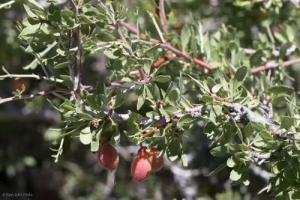
Pinkish-red fruits of the desert peach (Prunus andersonii).
Desert Peach Prunus andersonii Gray
observed in United States of America
by Ken-ichi Ueda (licensed under CC BY 4.0)

Alternative Names

Wild almond, Nevada Wild Almond, spiny peach, desert almond

Description of Desert Peach (Prunus andersonii)

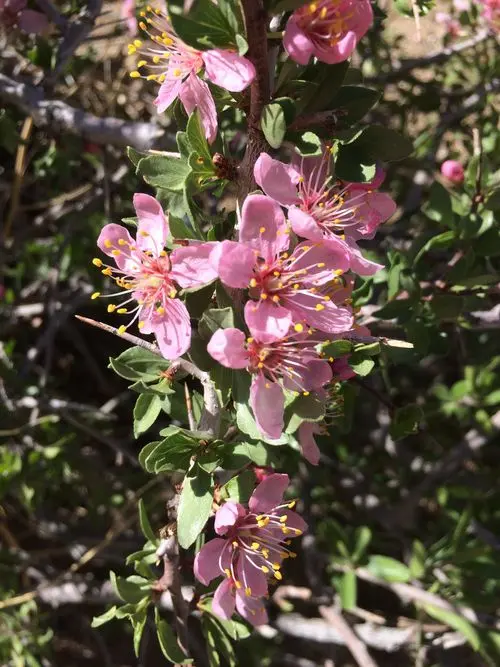
Desert Peach (Prunus andersonii), a member of the Rosaceae (Rose Family), is a shrub that grows from 3′ to 10′ tall and blooms with pink to dark pink flowers in the winter to spring (March to May).  The fruits, which are yellow to orange drupes, mature in the spring to summer (June to August).  More information can be found on this blog post about Desert Peach.

Hosted Species

Pale Swallowtail (Papilio eurymedon)

Pale Swallowtail on a red flower
Pale Swallowtail on Red Flower — ALAN SCHMIERER, CC0, via Wikimedia Commons

Eastern Tiger Swallowtail (Papilio glaucus)
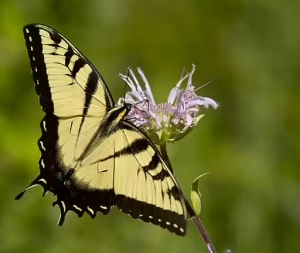
Eastern tiger swallowtail on flower.
Eastern Tiger Swallowtail — Shenandoah National Park from Virginia, Public domain, via Wikimedia Commons

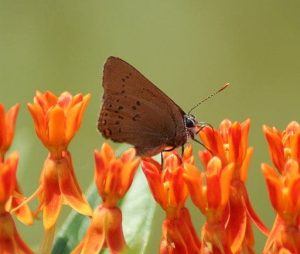
Coral Hairstreak (Satyrium titus)

Coral Hairstreak (Satyrium titus) on butterfly weed
Coral Hairstreak — Meganmccarty, Public domain, via Wikimedia Commons

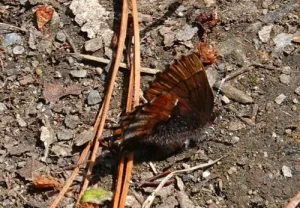
Henri’s Elfin (Callophrys henrici)

Henry's elfin (Incisalia henrici) on the ground.
Callophrys henrici (Grote & Robinson, 1867)
observed in Canada
by Ian Whyte (licensed under http://creativecommons.org/publicdomain/zero/1.0/)

Nectar Species

This species is used by other insects and is food for birds and mammals.  It is noted as a favored nectar plant for the Painted Lady Butterfly (Vanessa cardui).

Habitat

This species grows in open areas such as dry slopes, washes, sandy hills, meadow edges, and desert scrub.

Range of Desert Peach (Prunus andersonii) in the United States and Canada
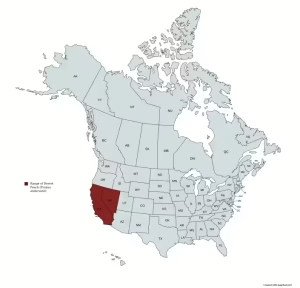
Range map of desert peach (Prunus andersonii) in the United States and Canada.


Interesting Facts

The genus name, Prunus, is Latin for “drupe.”  The species name, andersonii, comes from Latin for “Anderson” in honor of Charles Lewis Anderson, who the species was named in honor of.

location

California

usda-plant-hardiness

Zone 10, Zone 9

exposure_requirements

Full Sun, Part Shade/Part Sun

plant_habit

Shrub, Tree

soil_requirements

Dry, Medium, Moist

hosted-species

Lorquin's Admiral (Limenitis lorquini), Papilio eurymedon (Pale Swallowtail), Papilio rutulus (Western Tiger Swallowtail), Satyrium californica (California Hairstreak)

Reviews

There are no reviews yet.

Be the first to review “Desert Peach
(Prunus andersonii)”

Your email address will not be published. Required fields are marked *

The owner of this website has made a commitment to accessibility and inclusion, please report any problems that you encounter using the contact form on this website. This site uses the WP ADA Compliance Check plugin to enhance accessibility.