Table of Contents
Scarlet Beebalm (Monarda didyma) is a herbaceous perennial that is native in the eastern United States. This species is a host to the hermit sphinx moth (Sphinx eremitus) and several other moths. It is also a nectar plant for insects, such as the eastern Bumblebee (Bombus impatiens), and hummingbirds. Growing from 2 feet to 4 feet tall, this species grows . The scarlet red to red-purple flowers bloom from July to September and the plant is hardy in zones 4-9.
Taxonomy and Naming of Scarlet Beebalm (Monarda didyma)
collected in United States of America
by The New York Botanical Garden (licensed under http://creativecommons.org/licenses/by/4.0/)
Taxonomy
Scarlet Beebalm (Monarda didyma) was named and described by Carl von Linneaus in 1753. It has kept this same name since and is a member of the Mint Family (Lamiaceae).
Meaning of the Scientific and Common Names
Scientific Name
The genus name, Monarda, derives from the name of a Spanish botanist, Nicolas Monardes. The species name, didyma, is Latin for “in pairs” for the two stamens.
Common Name and Alternative Names
The common name comes from the color of the flowers. Some other common names include oswego-tea, crimson beebalm and Eau-de-Cologne plant (wikipedia).
Physical Description
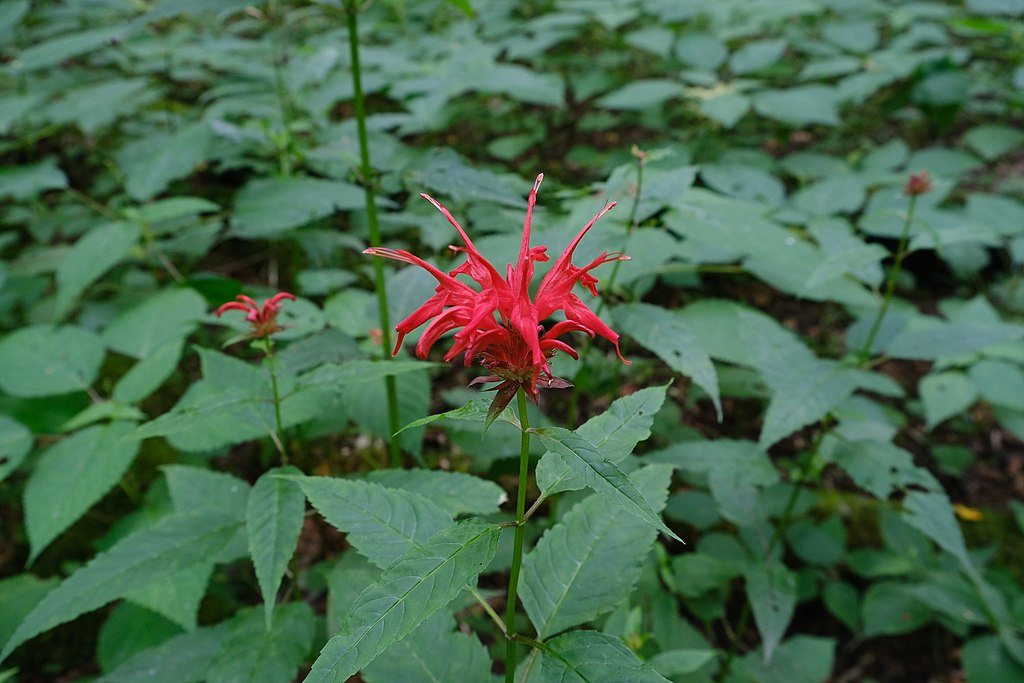
- Plant Type: This plant is a herbaceous perennial.
- Height: 2 ft (0.7 m) to 4.5 ft (1.5 m)
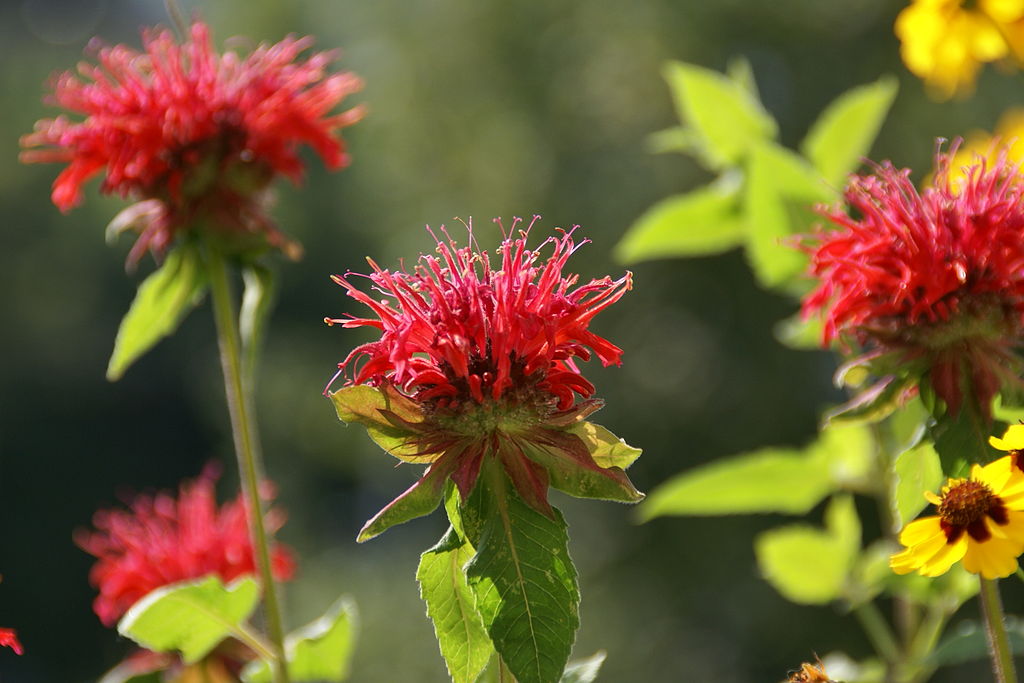
- Stem: The stems are erect, entire, and pilose at the nodes.
- Leaves: The leaves are opposite, ovate, deltoid-ovate to lanceolate, and have serrate margins. They are 3.0 in (7.0 cm) to 6.0 in (15.0 cm) long and 1 in (2.5 cm) to 3 in (9.5 cm) wide.
- Flower color: scarlet-crimson to red-purple
- Blooming period: This plant blooms from July to September.
- Fruiting type and period: This plant has capsules that mature in the fall.
Range of Scarlet Beebalm in the United States and Canada
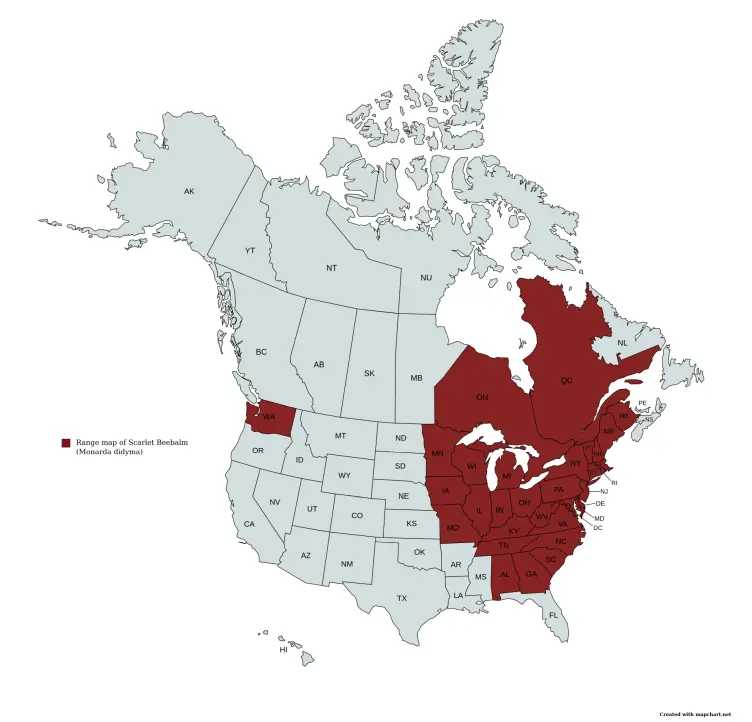
This species is native to eastern North America and is adventive to the state of Washington.
Habitat
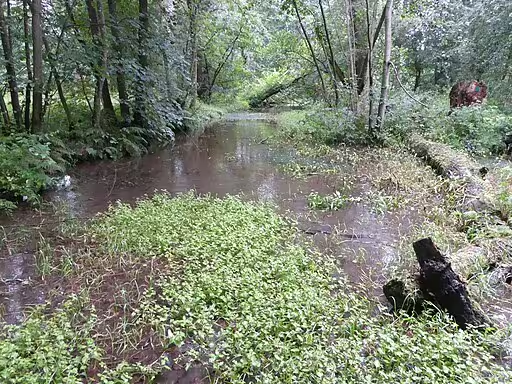
This species grows along streambanks (Bendrat 1913), fence-rows (Harger 1913),
Hosted Insects
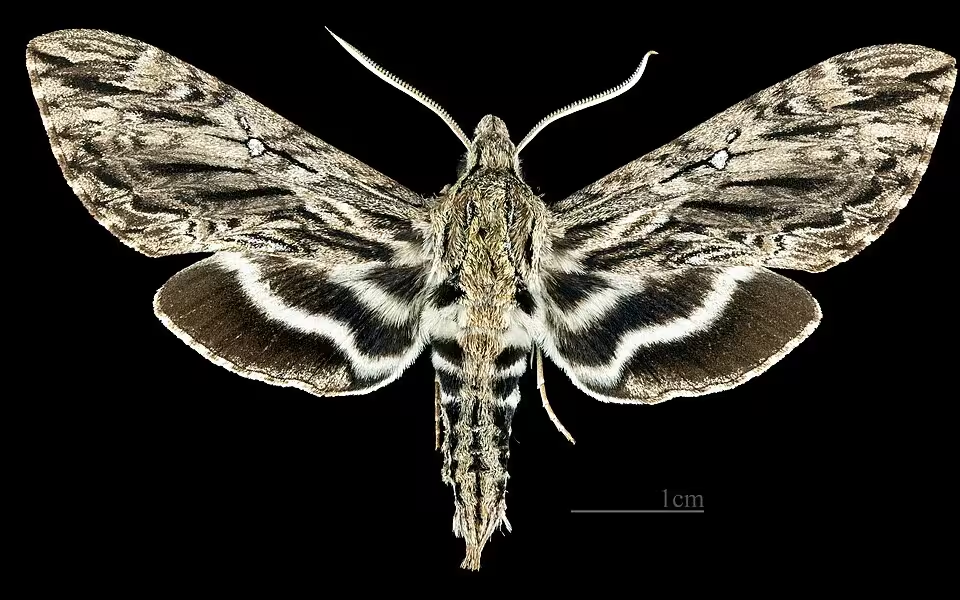
This species is a host plant to the hermit sphinx (Sphinx eremitus) and several other moths.
Other Supported Wildlife
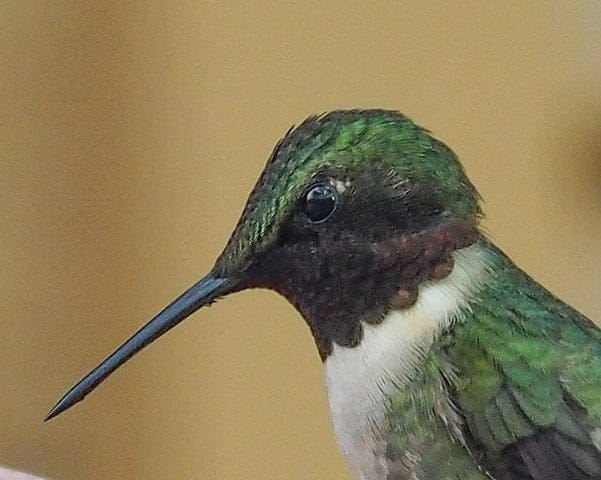
This species is a nectar source to other butterflies, skippers, bees, and wasps during the growing season. It is also visited by hummingbirds.
Frequently Asked Questions
Does this plant have any ethnobotanical uses?
The Native American Ethobotanical Database shows that this species has been used for analgesics, carminatives, diuretic, and as a cold remedy. This species has been used as a tea and condiment in the eastern United States (Laferriere, et al 1991).
How is this plant distinguished from other Beebalms?
This distinctive red color of the flowers serves to separate this species from others in the Monarda genus.
Is this plant invasive?
This species has not been noted as being weedy and can spread in gardens (USFS).
Gardening with Scarlet Beebalm
Hardiness
This species is hardy in zones 4-9. If your garden is within these zones and you have the right growing conditions (soil, moisture and exposure), you may well be able to grow this plant. However, if planted outside of its range, the hosted species may not recognize the plant or be harmed by ingesting a different species with an unfamiliar chemical composition.
Optimal Conditions
This species requires full sun to part-shade and medium to moist rich, well-drained soils.
References
- Bendrat, T.A. 1913. The Flora of Mohawk Hill, NY, North of the Watershed. Torreya 13: 45-63.
- Harger, E. B. 1913. Some plants of the Southbury Triassic Area. Rhodora 15: 65-68.
- Laferriere, Joseph E., Charles W. Weber, Edwin A. Kohlhepp. 1991. Use and Nutritional Composition of Some Traditional Mountain Pima Plant Foods. Journal of Ethnobiology 11: 93-114.