Table of Contents for Beach Plum
Beach Plum (Prunus maritima) is a large shrub to small tree that is native to the southeastern United States. This plant is a host to several butterflies, including swallowtails, and several moths. Growing from 3 to 6 (8) feet tall, this tree has white flowers that bloom from April to May. It is hardy in zones 3-7.
Taxonomy and Naming of Beach Plum (Prunus maritima)
Taxonomy
Beach Plum (Prunus maritima) was originally named and described by Humphrey Marshall, an American botanist, in 1785. The species has kept this name since and is a member of the Rose Family (Rosaceae).
Subspecies
This species has two varieties that are separated by leaf shape (Anderson 1980).
- Prunus maritima var. gravesii: orbiculate leaves
- Prunus maritima var. maritima: lanceolate leaves
Meaning of the Scientific and Common Names
Scientific Name
The genus name, Prunus, is Latin for drupe, referring to the fruit type of the genus (Missouri Botanical Garden). The species name, maritima, is a Latinized maritime, describing the habitat of the species.
Common Name and Alternative Names
The common name comes from the beach locations were the species grows. Other common names are shore plum (Mitchell, et al 1996).
Physical Description of Beach Plum (Prunus maritima)
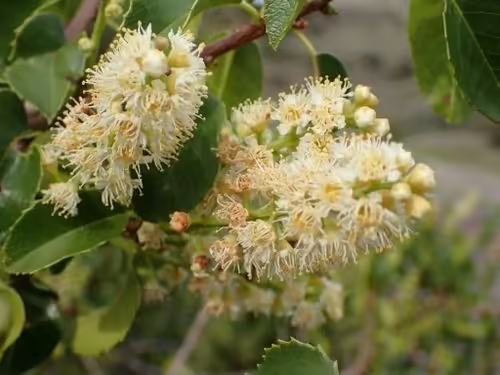
Description
- Plant Type: This plant is a shrub that often straggles.
- Height: 3 to 6 (8) feet
- Stem: dark gray to brownish with yellow lenticels (Wight 1915)
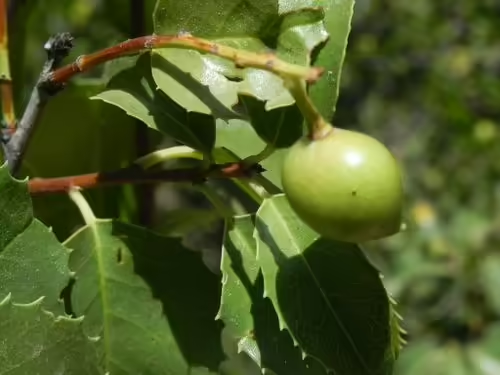
- Leaves: The leaves are alternate, ovate, elliptic to lanceolate. The leaves are 1.6 in (4 cm) to 2.6 in (6.5 cm) long and 0.8 in (2 cm) to 1.6 in (4 cm) wide. The glabrous leaves are serrate.
- Flower color: white
- Blooming period: This plant blooms from April to May.
- Fruiting type and period: This plant has dull purple drupes to yellow (Torrey 1914) that mature in the late summer.
Range of Beach Plum (Prunus maritima) in the United States and Canada
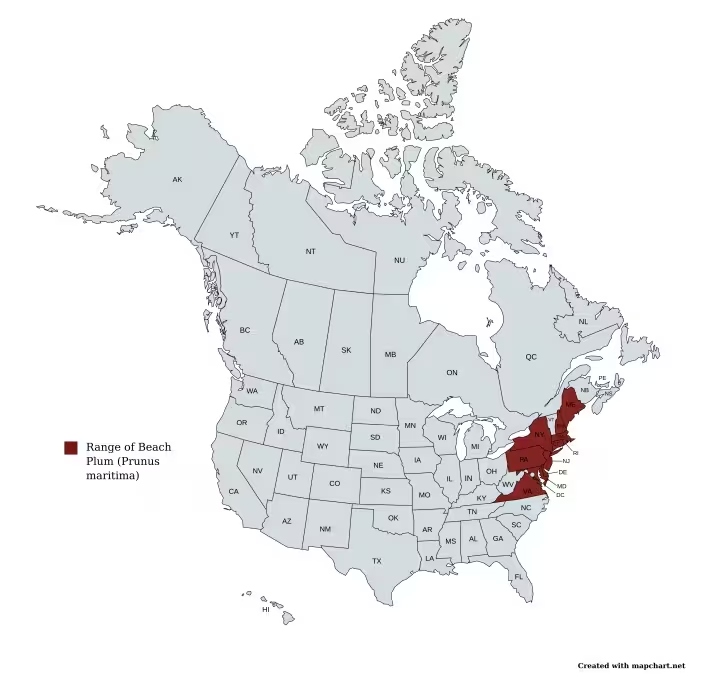
Beach plum is found on coast in the mid-atlantic to northeastern United States.
Habitat
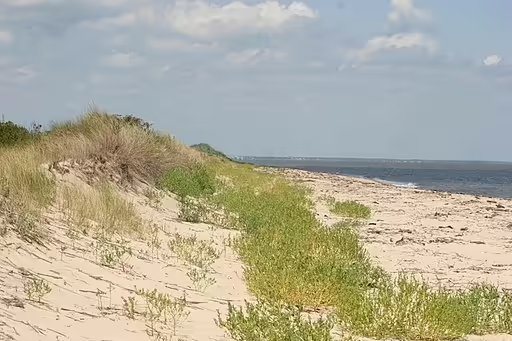
This species grows in coastal dunes and thickets (Moul 1969), rocky and sandy shores (Harper 1916), along the coast and inland in sandy habitats.
Hosted Insects
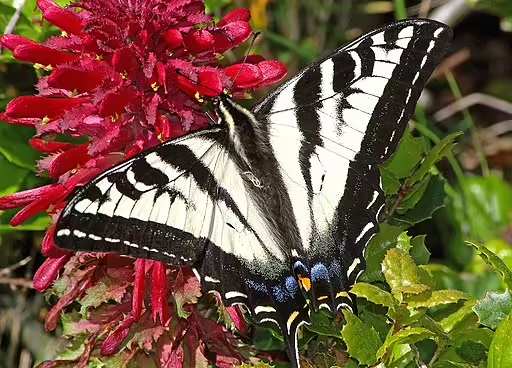
This species is a host for five butterflies and several species of moths. These include the pale swallowtail (Papilio eurymedon), and eastern tiger swallowtail (Papilio glaucus). Moths include the precious underwing (Catocala pretiosa) (Shuey, et al 1987)
Other Supported Wildlife
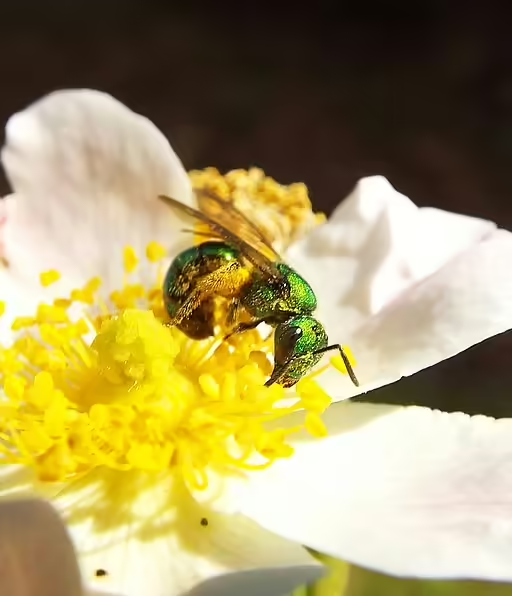
This species is a nectar source to other butterflies, skippers, bees, and wasps during the growing season.
Frequently Asked Questions about Beach Plum (Prunus maritima)
Does this plant have any ethnobotanical uses?
The is often used for jelly (Moul and Ruth 1973).
How is this plant distinguished from other cherries?
This species is separated from other cherries by having pubescent twigs and glandless teeth on the leaves. It is closest to the Oklahoma Plum, but they do not cover the same range.
Is this plant invasive?
This plant has not been shown to be invasive in the literature.
Is this plant poisonous?
The seeds of this plant are poisonous if eaten.
Gardening with Beach Plum (Prunus maritima)
Hardiness
This species is hardy in zones 3-7. If your garden is within these zones and you have the right growing conditions (soil, moisture and exposure), you may well be able to grow this plant. However, if planted outside of its range, the hosted species may not recognize the plant or be harmed by ingesting a different species with an unfamiliar chemical composition.
Optimal Conditions
This species grows best in places with full sun and dry, sandy soils.
References
- Anderson, Gregory J. 1980. New England note: change in status for Prunus gravesii. Rhodora 82: 375-376.
- Harper, Roland M. 1916. An Overlooked Environmental Factor for Species of Prunus. Rhodora 18: 201-203.
- Mitchell, Richard S. and Gordon C. Tucker. 1996. Revised Checklist of New York State Plants. Bulletin of the New York State Museum no. 490.
- Moul, Edwin T. and Ruth Von Arx. 1973. Marine Flora and Fauna of the Northeastern United States: higher plants of the Marine Fringe. NOAA Technical Report NMFS CIRC 384.
- Moul, Edwin T. 1969. Flora of Monomoy Island Massachusetts USA. Rhodora 71: 18-28.
- Shuey, J.A., E.H. Metzler, David C. Iftner, John V. Calhoun, J.W. Peacock, Reed A. Watkins, J.D. Hooper, and William F. Babcock. 1987. Status and Habitats of Potentially Endangered Lepidoptera in Ohio, USA. Journal of the Lepidopterists’ Society 41: 1-12.
- Torrey, George Stafford. 1914. Two Yellow-Fruited Shrubs. Rhodora 16: 91-92.
- Wight, W.F. 1915. Native American species of Prunus. Bulletin of the U.S. Department of Agriculture no. 179.