Table of Contents
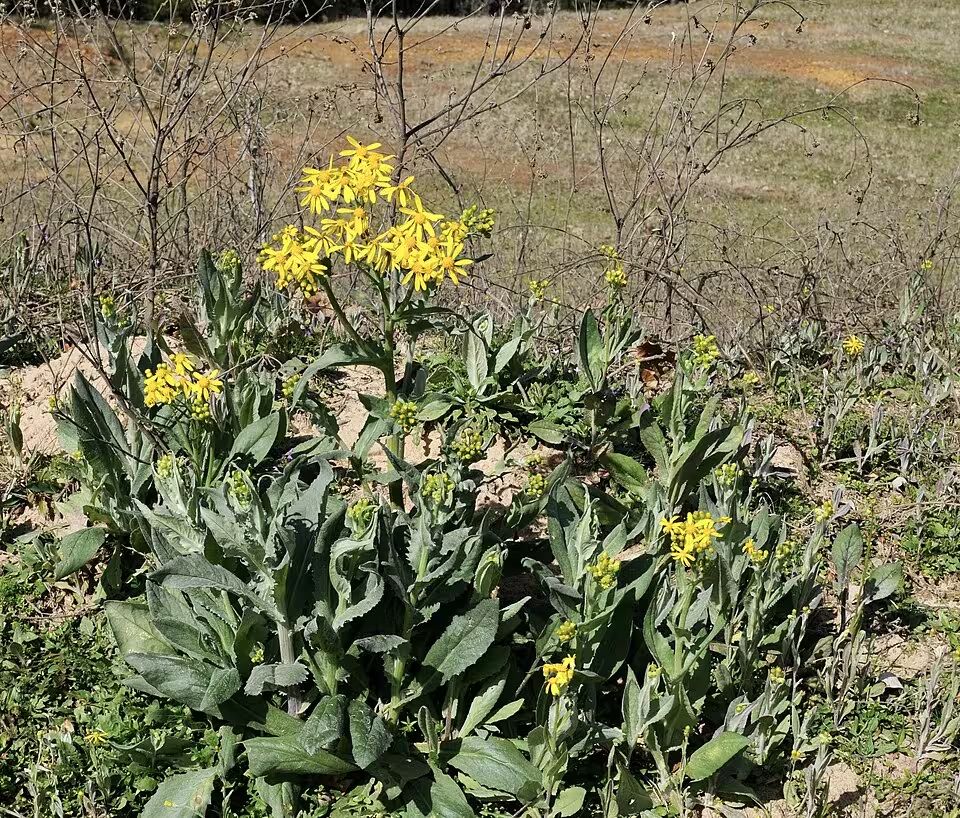
Texas ragwort (Senecio ampullaceus) is a herbaceous perennial that is native to the south-central United States. This species is a host to the northern metalmark (Calephelis borealis), American lady (Vanessa virginiensis), and the painted lady (V. cardui) butterflies. Growing from 0.2 feet to 2.0 feet tall, this species grows in rocky pinelands. The yellow flowers bloom from June to August and the plant is hardy roughly in zones 7-9.
Taxonomy and Naming of Texas Ragwort (Senecio ampullaceus)
Taxonomy
Texas Ragwort (Senecio ampullaceus) was originally named and described by Thomas Hooker, an American botanist in 1836. It has kept this same name since and is a member of the Aster Family (Asteraceae).
Meaning of the Scientific and Common Names
Scientific Name
The genus name, Senecio, derives from the Latin “Senex,” which means “old man” (Wikipedia). The species name, ampullaceus, comes from the Latin for “jar or bottle.”
Common Name and Alternative Names
The common name comes from the native location of the species. Alternative names include Texas groundsel (Fleming, et al 2002), Texas butterweed, flask-flowered american groundsel (Loudon 1844), and Texas squaw-weed (Young 1920).
Physical Description
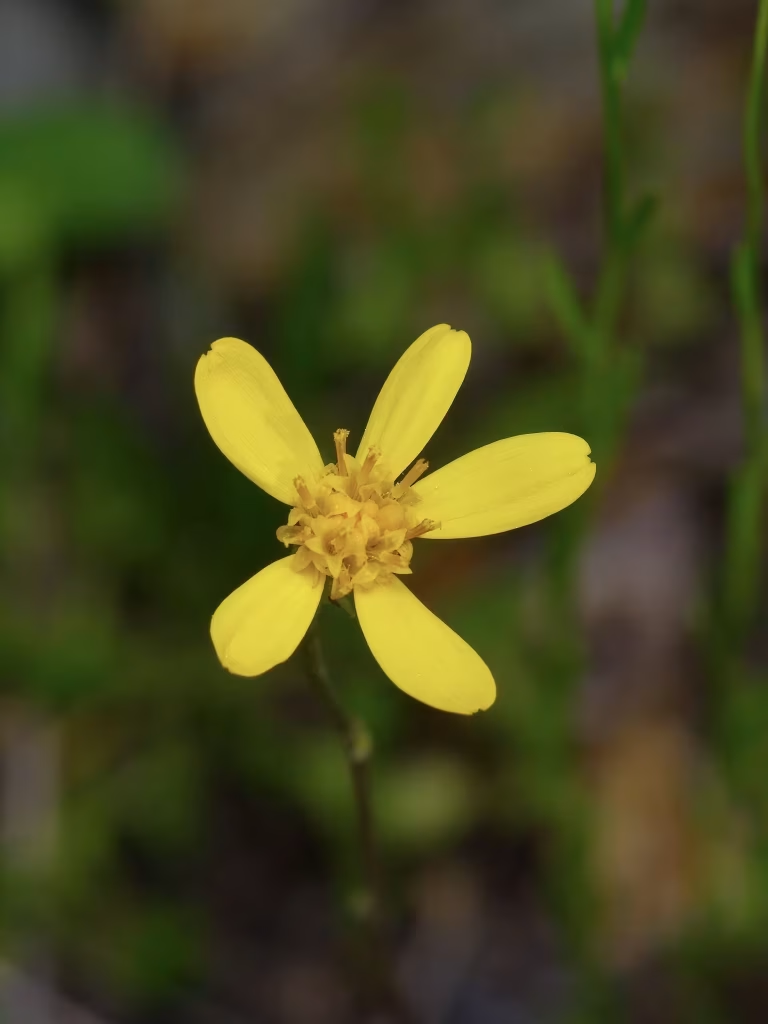
- Plant Type: This plant is a herbaceous perennial.
- Height: 1 ft (0.3 m) to 3 ft (1 m)
- Stem: The stems are erect and smooth (Flora of North America).
- Leaves: The leaves are alternate, obvate to lanceolate, and have entire or coarsely toothed (dentate) margins. The leaves are 1.2 in (3 cm) to 3 in (7.5 cm) long and 0.4 in (1 cm) to 1.6 in (4 cm) wide (Flora of North America).
- Flower color: yellow
- Blooming period: This plant blooms from March to May.
- Fruiting type and period: This plant has achenes that mature in the late fall and winter.
Range of Texas Ragwort in the United States and Canada
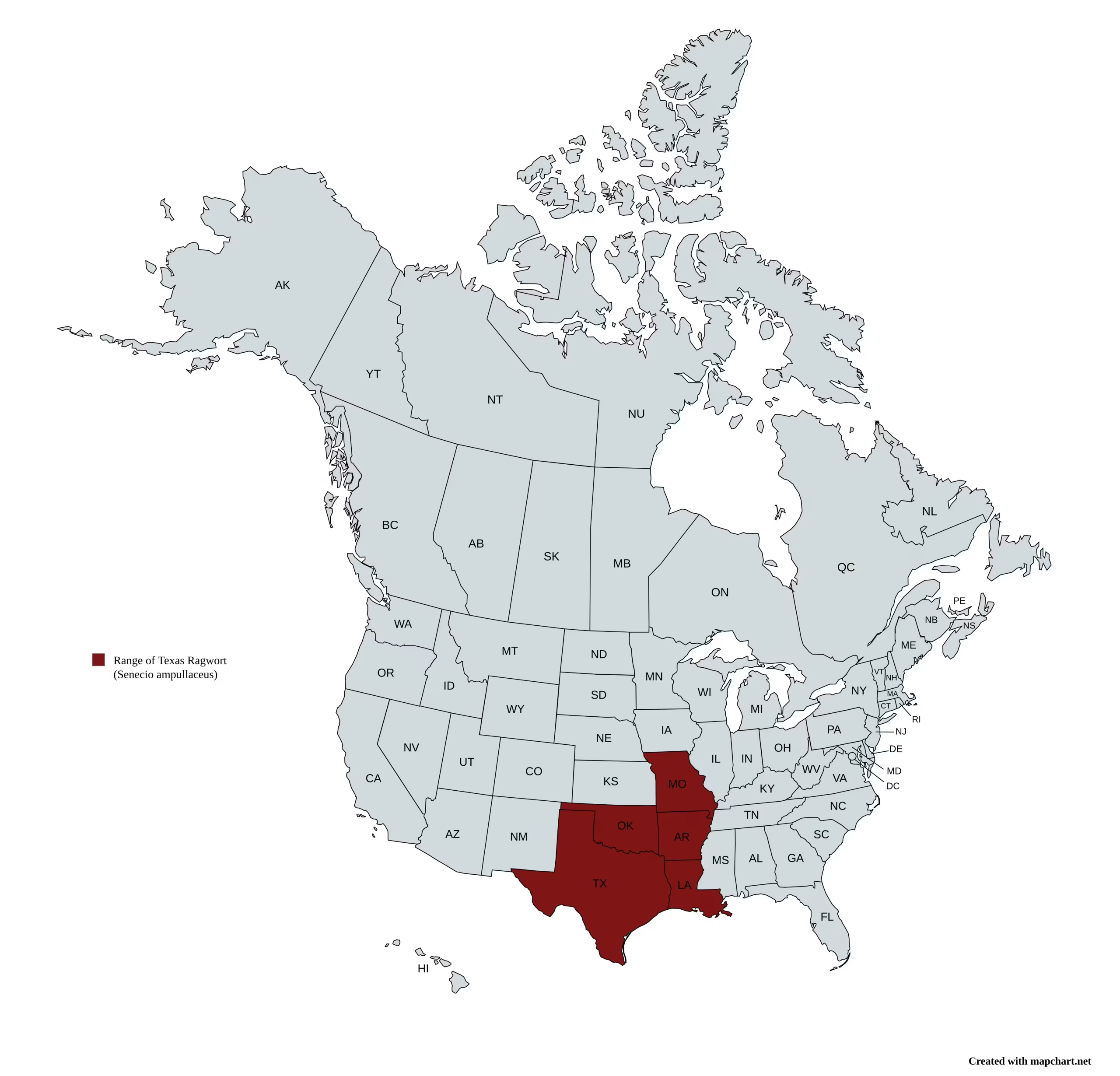
This ragwort species is native in the south-central United States. It is rare in Oklahoma, Arkansas, and Louisiana and adventive in Missouri. It is common in Texas.
Habitat
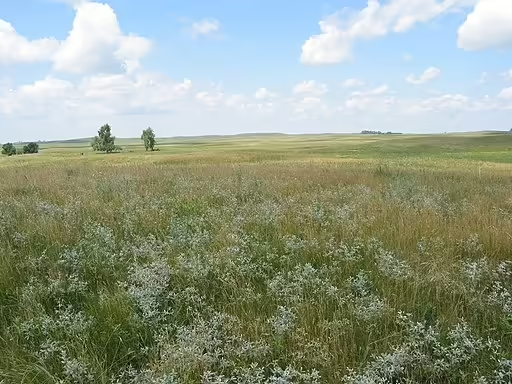
This species grows on open sandhills and roadsides (Holmes, et al 2006), xeric sandylands (Macroberts, et al 2009), disturbed open places (Barkley 2000), river floodplains (Young 1920), sandy prairies (Small 1903) and sandy open woods (McPhail and Nelson 2005).
Hosted Insects
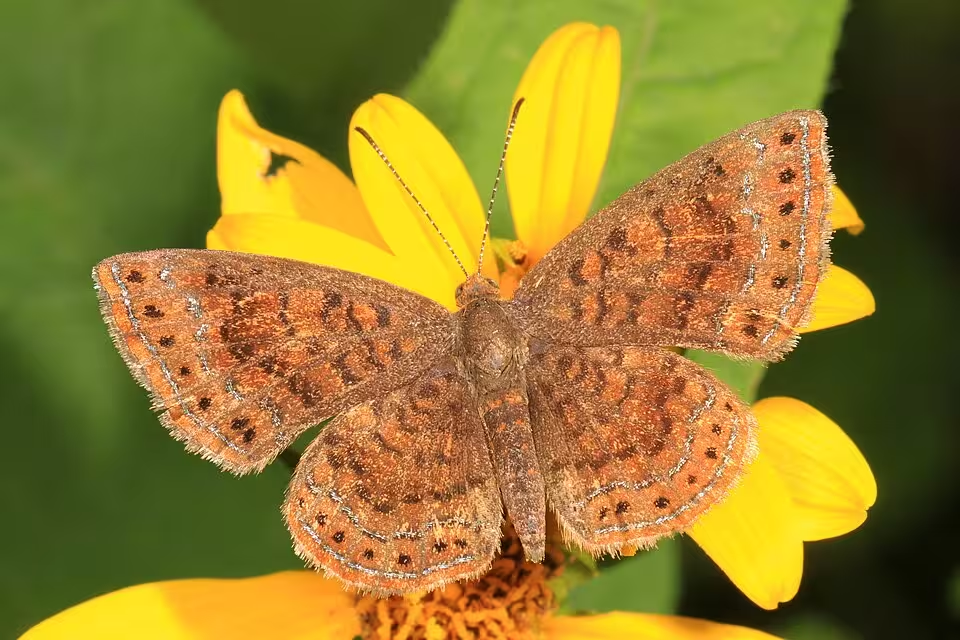
This ragwort, like other ragworts, is a host to three butterflies. These include: the northern metalmark (Calephelis borealis), American lady (Vanessa virginiensis), and the painted lady (V. cardui).
Other Supported Wildlife
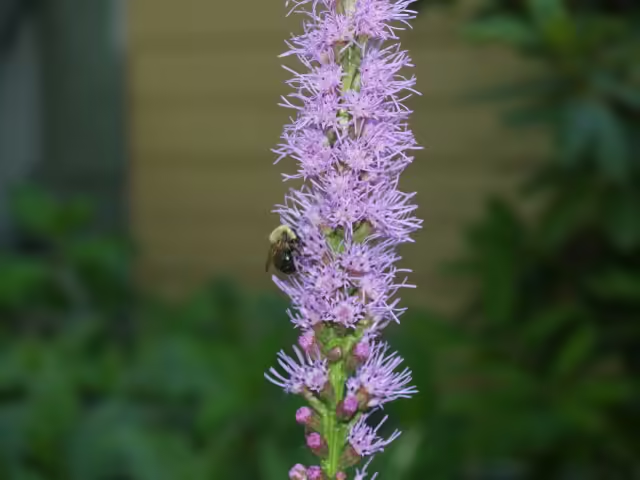
This species is a nectar source to other butterflies, skippers, bees, and wasps during the growing season.
Frequently Asked Questions
Does this plant have any ethnobotanical uses?
The North American Ethnobotany Database does not show any uses for this species, but the genus in general has been used for colds, skin diseases, gynecological aid, and for fibers.
How does this Senecio species differ from others?
Senecio ampullaceus has undivided leaves which makes it different from others (Quillen 1922). S. ampullaceus is very similar to S. quaylei, but S. quaylei has glabrous (non-hairy) stems, and S. ampulaceus has hairy stems (Barkley 2000).
Is this plant invasive?
This species has not been noted as being weedy.
Gardening with Texas Ragwort
Hardiness
This species is hardy in zones 7-9. If your garden is within these zones and you have the right growing conditions (soil, moisture and exposure), you may well be able to grow this plant. However, if planted outside of its range, the hosted species may not recognize the plant or be harmed by ingesting a different species with an unfamiliar chemical composition.
Optimal Conditions
This species requires full sun to partial shade and dry well-drained soils.
References
- Barkley, TM. 2000. Senecio Quaylei (Asteraceae: Senecioneae), A New Species From North Central Texas, USA. Sida 19: 285-289.
- Fleming, Kay M., Jason R. Singhurst, and Walter C. Holmes. 2002. Vascular Flora of Big Lake Bottom Wildlife Management Area, Anderson County, Texas. Sida 20: 355-371.
- Holmes, Walter C., Jason R. Singhurst, and Steve G. Powers. 2006. Senecio ampullaceus (Asteraceae): a West Gulf Coastal Plain endemic new to Oklahoma. Phytologia 88: 193-196.
- Loudon, Jane. 1844. The ladies’ flower-garden of ornamental perennials. W. Smith.
- Macroberts, Barbara R., Michael H. Macroberts, Christopher S. Reid, and Patricia L. Faulkner. 2009. Additions and Emendations to the Vascular Flora of Caddo Parish, Louisiana. Journal of the Botanical Research Institute of Texas 3: 379-382.
- McPhail, S. and D. Nelson. 2005. Range Extensions and County Records for Angiosperms from the Southwestern Cross Timbers in Eastland County, Texas. Texas Journal of Science 57(3): 211-222.
- Quillen, Ellen Schulz. 1922. 500 Wild flowers of San Antonio and vicinity. Self-published.
- Small, John Kunkel. 1903. Flora of the southeastern United States. Self-published.
- Young, Mary Sophie. 1920. The seed plants, ferns, and fern allies of the Austin Region. University of Texas Bulletin No. 2065.