Table of Contents
There are seven species of native or nearly native Cumberland County milkweeds (Asclepias spp.) that can be grown for butterflies and other insects. Milkweeds are an important host species for monarch butterflies in Maine. The monarch butterfly in particular uses the cardenolides found in the milky sap of milkweeds to give an unpleasant taste to predators. These plants are also an important nectar source to all insects visiting your pollinator garden.
General Information about Native Plant and Pollinator Gardens
When planting a native plant and pollinator garden in Cumberland County, ME, you need to ensure that you have a selection of plants that provide blooms at different times of the year. In addition to the plants, you need to provide a source of water such as a birdbath or water feature, shelter for animals, and nesting locations for birds. Be sure to also include plants of different heights for perching.
Resources you can use for more information on butterfly gardening in Cumberland County, ME include the University of Maine Cooperative Extension, Maine Audubon, Wild Seed Project of Xerces Society, Cumberland County Soil & Water Conservation District. Plant nurseries to find native plants include the Edgewood Nursery, Skillins Greenhouses, Gilsland Farm Audubon Center, and Broadway Gardens Greenhouses.
Location of Cumberland County, ME
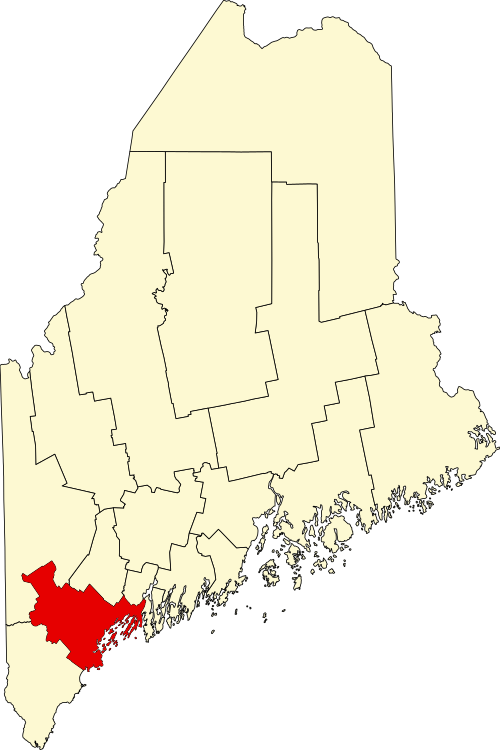
Cumberland County, ME is located in the southwestern part of the state. Portland is the largest city and is located on the coast.
USDA Plant Hardiness Zones in Cumberland County, Maine
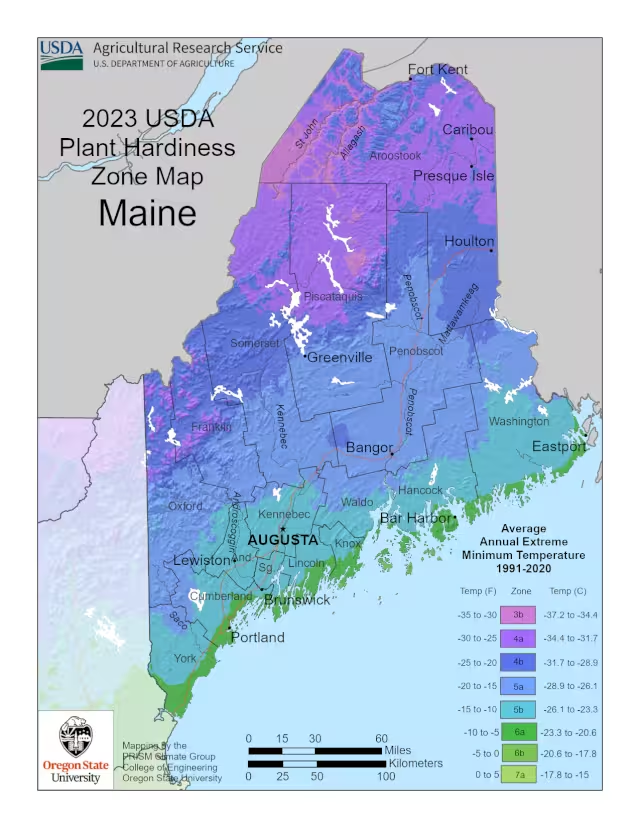
Cumberland County, ME has three plant hardiness zones within it, 5a to 6a. Generally it is warmer the closer you get to the coast. When selecting plants in Cumberland County you will want to get those that can handle temperatures as cold as -200F.
Butterflies in Cumberland County, ME that are Hosted by Milkweeds (Asclepias spp.)
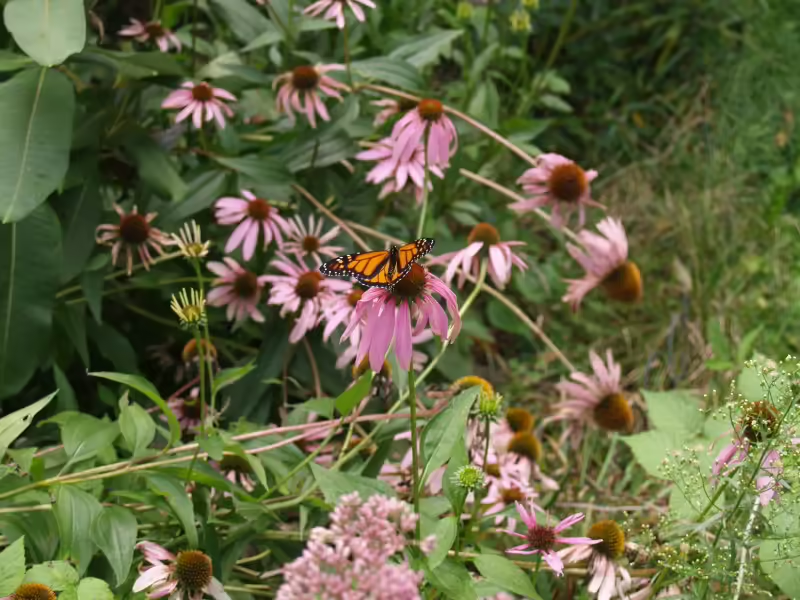
Monarch Butterfly (Danaus plexippus)
The monarch butterfly is an iconic butterfly in North America and is a bell-weather of the environment. Having a distinctive orange color with black stripes, this butterfly has a wingspan of 3 in (7.6 cm) to 5 in (12.7 cm). The monarch butterfly uses milkweed to get cardenolides, a toxin that is distasteful to predators. This butterfly can have several flights a year and is known for its migrations to Mexico each year. However, some populations in California, Arizona, and Florida do not migrate and breed year-round (Urguhart, et al 1968).
List of Milkweeds that are Native or Nearly Native in Cumberland County, ME
1. Clasping Milkweed (Asclepias amplexicaulis), a Milkweed for Moist to Dry Soils
Clasping milkweed is found in open to semi-open places such as meadows, savannas, woodlands, and roadsides. While it likes full sun, this plant can handle part-shade and needs clay, loam, or sandy soil that is well-drained. Reproduction is through seeds and underground rhizomes. The pink to purple flower clusters have about 25 fragrant flowers each.
Clasping Milkweed likes places that are sunny, with a sandy and/or gravelly substrate. These condistions exist in a number of places on the island. The distinct, broad leaves, of clasping milkweed which clasp the stem give it a rather bold architectural presence.
For companion plants, you should look at species that appreciate similar xeric conditions and won’t crowd the unique form of this milkweed. Consider mixing in Little Bluestem (Schizachyrium scoparium), a superb native grass that offers textural contrast and thrives in lean soils. Another excellent partner could be Wild Indigo (Baptisia tinctoria), which blooms a bit earlier, providing nectar before A. amplexicaulis hits its stride in late spring or early summer, and its deep taproot is well-suited to sandy soils.
For lower-growing companions, perhaps Bearberry (Arctostaphylos uva-ursi), a native groundcover that offers evergreen interest and spring flowers for early pollinators, would be suitable, provided the soil pH is acidic enough. The key here is to ensure good air circulation and avoid overly rich soils.
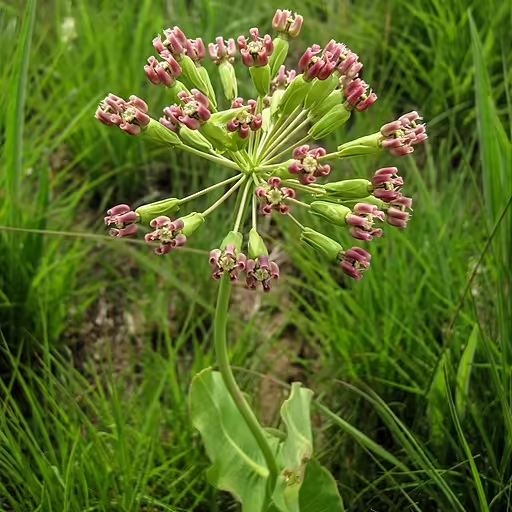
Facts about Clasping Milkweed
- Native to Maine: No (Kartesz 2015)
- Native to Cumberland County: No
- Natural Habitat: dry woodlands, meadows, and roadsides
- Height: up to 3 ft (0.9 m)
- Flower Color: greenish-pink, red, brown, to purple
- Flowering Period: March to September
- USDA Hardiness Zone: 3-9
Gardening with Clasping Milkweed
In your Cumberland County, ME butterfly garden, this milkweed needs full sun to part-shade and moist to dry soils.
2. Poke Milkweed (Asclepias exaltata), a Milkweed for Shade and Moist Soils
Poke milkweed is a part-shade to shade loving milkweed, but can handle full sun in a garden setting. A variety of soils such as clay, loamy, and sand that are moderate to wet and are well-drained are needed. The leaves of this milkweed are notable for being dark green with purplish veins.
Poke milkweed presents a slightly different challenge and opportunity as compared to other milkweeds. Unlike its sun-loving cousins, Asclepias exaltata typically prefers the dappled light and richer, moister soils of woodland edges or clearings. So, if you have such a spot on your Cumberland County property, perhaps with a bit more loam or humus, it could thrive. Its tall stature and drooping umbels of greenish-white to pale pink flowers are quite distinct.
Suitable companion plants would be those that share this affinity for partial shade and mesic conditions. Think about plants like Woodland Aster Eurybia divaricata or a similar native aster like Symphyotrichum cordifolium, which provide late-season nectar. Swamp milkweed (Asclepias incarnata) can grow with this species. Foamflower (Tiarella cordifolia) could form a lovely groundcover at its feet, appreciating similar moisture levels.
For a bit of textural contrast, consider native ferns like Christmas Fern (Polystichum acrostichoides) or Marginal Wood Fern (Dryopteris marginalis) that won’t compete too aggressively for resources. Are we considering how the light conditions transition throughout the day in the proposed planting area?
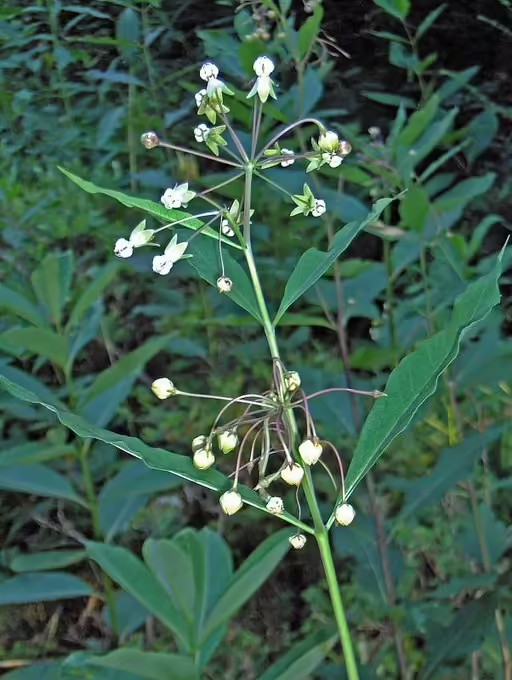
Facts about Poke Milkweed
- Native to Maine: Yes, southwest counties (Kartesz 2015)
- Native to Cumberland County: Yes
- Natural Habitat: moist woods, roadsides, and edges of woods
- Height: 2 ft (0.6 m) to 6 ft (1.8 m)
- Flower Color: white to green with accents of rose, purple, or blue
- Flowering Period: May to August
- USDA Hardiness Zone: 3-9
Gardening with Poke Milkweed
In your Cumberland County, ME butterfly garden, this milkweed needs part-shade to full shade and moist soil.
3. Swamp Milkweed (Asclepias incarnata), a Milkweed for Moist Soils
Previously mentioned as a companion to the poke milkweed, swamp milkweed likes wet soils in full sun or partial shade. However, in a garden setting, this species can handle drier conditions. Swamp milkweed is a fairly tall milkweed and needs space to spread out. A benefit is that it is fairly low maintenance. The fragrant pink flowers are a magnet for bees and other insects.
Swamp milkweed, as its name would suggest, is a lover of moisture. Whether it’s a sunny streamside, a moist meadow, or a rain garden, Asclepias incarnata is in its element. In Cumberland County, if you have areas with consistently damp soil – perhaps not a bog, but certainly not the dry dunes, this is your star. Its vibrant pink to mauve flowers are a magnet for a wide array of pollinators.
So, what companions appreciate similar conditions? Joe Pye Weed (Eutrochium maculatum or Eutrochium dubium, the latter being more coastal plain appropriate) is a classic partner, offering late-summer blooms and similar height. Cardinal Flower (Lobelia cardinalis) would provide a stunning color contrast with its brilliant red flowers, also thriving in moist soils and attracting hummingbirds.
For plants that offer a different structure, consider Blue Flag Iris (Iris versicolor) or perhaps some of the moisture-loving sedges like Carex lurida or Carex crinita. Whatever plants are selected, make sure you select an area that is consistently moist.
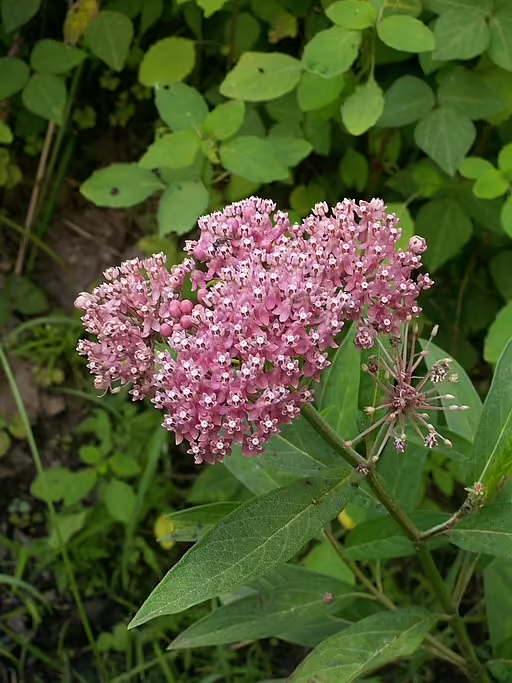
Facts about Swamp Milkweed
Asclepias incarnata subsp. incarnata and pulchra in Maine
- Native to Maine: Yes, throughout – pulchra, western counties – incarnata (Kartesz 2015)
- Native to Cumberland County: Yes, subsp. incarnata and pulchra
- Natural Habitat: shores of streams, lakes, ponds, and other wetlands
- Height: 3 ft (0.9 m) to 5 ft (1.5 m)
- Flower Color: pink or red
- Flowering Period: July to September
- USDA Hardiness Zone: 3-9
Gardening with Swamp Milkweed
In your Cumberland County, ME butterfly garden, this milkweed needs full sun to partial shade and medium to moist soil.
4. Purple Milkweed (Asclepias purpurascens), a Milkweed for Moist Soils
If you are looking for a splash of purple in your garden while hosting the monarch butterflies, this milkweed may be for you. In the wild this species is found in moist soils, but can grow in medium well-drained soils in a garden and can even tolerate droughts, if established. Be sure to have plenty of space for this plant, as it likes to spread and form colonies.
Purple milkweed (Asclepias purpurascens), with its rich, deep magenta flowers, is a truly stunning plant. It generally prefers sites with full sun to light shade and well-drained to medium-moist soils, often found in prairies, open woods, and glades. It can be a bit more particular than some other milkweeds. In Cumberland County, a spot with good drainage but some moisture retention would be key.
For companions, you might consider plants like Wild Bergamot (Monarda fistulosa), which attracts a plethora of pollinators and shares similar light and soil preferences. Tall Coreopsis (Coreopsis tripteris) could offer a nice vertical element and late-summer blooms. If the soil is on the leaner side, Butterfly Weed (Asclepias tuberosa), which we’ll discuss later, could be a good neighbor, ensuring a succession of milkweed blooms. When planting this milkweed be sure your intended site offers a balance between sufficient moisture and good drainage that A. purpurascens appreciates.
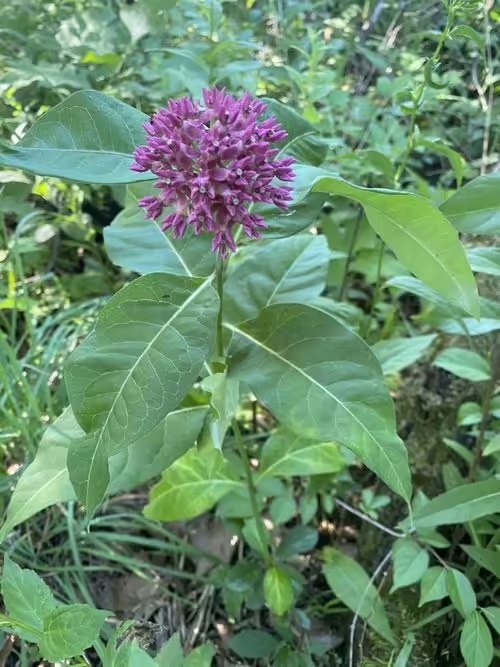
Facts about Purple Milkweed
- Native to Maine: No (Kartesz 2015)
- Native to Cumberland County: No
- Natural Habitat: swamps, woodlands, meadows, and roadsides
- Height: up to 6 ft (1.8 m)
- Flower Color: purple, rose to pink, may mature to purple color
- Flowering Period: May to July
- USDA Hardiness Zone: 3-8
Gardening with Purple Milkweed
In your Cumberland County, ME butterfly garden, this milkweed needs full sun to part-shade (more shade preferred) and moist well-drained soil. This species can also handle dry conditions.
5. Four-leaf Milkweed (Asclepias quadrifolia), a Milkweed for Dry Rocky Soils
If you have dry well-drained soils and some shade, this milkweed may be a good choice for you. In the wild, this species can be found growing in dry woodlands. Four-leaf milkweed has clusters of white to pink flowers and can be grown from seed or cuttings.
This charming, smaller milkweed, four-leaf milkweed (Asclepias quadrifolia), is typically a denizen of dry to mesic upland woods, rocky slopes, and clearings, often in part shade. Its delicate pinkish-white flowers appear relatively early for a milkweed. So, in Cumberland County, we’d be looking for a location that mimics these conditions, such as a partly shaded, well-drained slope. What would thrive alongside it? Consider Wild Columbine (Aquilegia canadensis), which shares a love for well-drained soils and partial shade, and its early blooms coincide nicely. Woodland Phlox (Phlox divaricata) could provide a carpet of spring color. For ferns, perhaps Marginal Wood Fern (Dryopteris marginalis) again, or Hay-scented Fern (Dennstaedtia punctilobula) if you have the space, though the latter can be a vigorous spreader. The goal is to create a gentle, woodland-edge habitat.
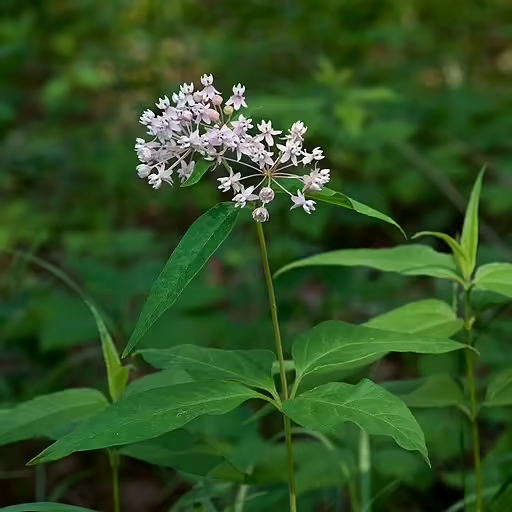
Facts about Four-leaf Milkweed
- Native to Maine: No (Kartesz 2015)
- Native to Cumberland County: No
- Natural Habitat: roadsides and pastures that have disturbance, dry places
- Height: 1 ft (0.3 m) to 3 ft (0.9 m)
- Flower Color: white to pink
- Flowering Period: April to July
- USDA Hardiness Zone: 5-8
Gardening with Four-leaf Milkweed
In your Cumberland County, ME butterfly garden, this milkweed needs full sun to part-shade and dry rocky soils.
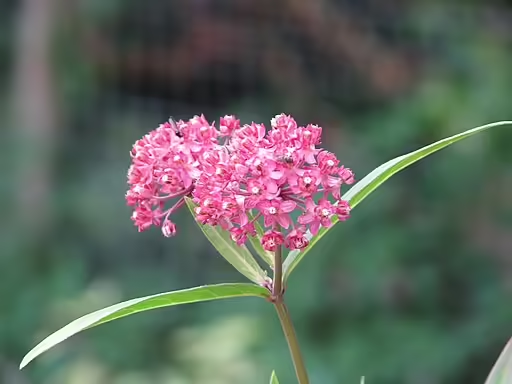
6. Red Milkweed (Asclepias rubra), a Milkweed for Moist to Wet Soils
Another milkweed of moist soils, this milkweed is often found in full sun. However, in a garden setting it can be grown in medium soils. Other companion plants would be those that can also handle moist soils such as swamp milkweed (Asclepias incarnata), purple milkweed (Asclepias purpurascens), and false nettle (Boehmeria cylindrica). The small size could make this plant suitable for containers.
Asclepias rubra, or Red Milkweed, is an interesting milkweed. It typically inhabits bogs, pocosin edges, and moist pine savannas, primarily in the coastal plain of the southeastern U.S. Like A. longifolia, this species would require a dedicated spot in Cumberland County near the coast with consistently moist to wet, acidic, sandy or peaty soil, and full to partial sun. Also, this plant is at the edge of its hardiness zone, in Maine and would have to be close to the coast and likely in a sunny area.
Are you cultivating such specific conditions? If so, its companions would be other acid-loving, moisture-tolerant plants. Think about Large Cranberry (Vaccinium macrocarpon) as a native groundcover, or perhaps various sedges like Carex stricta. Sweet Pepperbush (Clethra alnifolia) could be a larger shrubby companion that thrives in similar wet, acidic sites and offers fragrant late-summer blooms highly attractive to pollinators. This species truly tests our commitment to replicating specific habitat niches, similar to long-leaf milkweed.
Facts about Red Milkweed
- Native to Maine: No (Kartesz 2015)
- Native to Cumberland: No
- Natural Habitat: bogs, meadows, and pine barrens
- Height: 1 ft (0.3 m) to 3 ft (0.9 m)
- Flower Color: pink, purple, red to lavender
- Flowering Period: May to August
- USDA Hardiness Zone: 6-9
Gardening with Red Milkweed
In your Cumberland County, ME butterfly garden, this milkweed needs full sun to part-shade and wet organic soils.
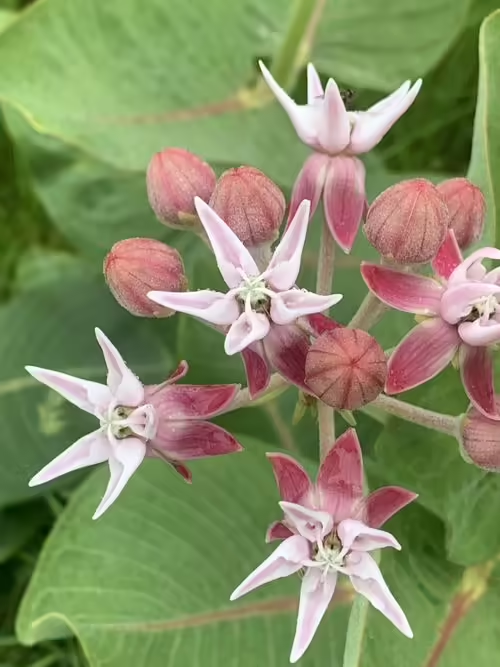
7. Showy Milkweed (Asclepias speciosa), a Milkweed for Medium to Well-drained Soils
Showy milkweed is a commonly planted milkweed in butterfly gardens around the United States. It is a small to medium sized plant, making it suitable for containers, but whether planted in the ground or in a container, it needs good drainage. While not native to Cumberland County, it can handle the plant hardiness zones of the county down to zone 3.
Asclepias speciosa, or Showy Milkweed, is a magnificent plant that is often a featured in butterfly gardens in the US. From an ecological perspective, it’s primarily a species of the western and central United States, thriving in prairies and open areas. In Cumberland County, it is likely best considered a plant for container gardens due to it being far from its native range.
Facts about Showy Milkweed
- Native to Maine: No (Kartesz 2015)
- Native to Cumberland County: No
- Natural Habitat: roadsides, fields and woodlands
- Height: 1 ft (0.3 m) to 3 ft (0.9 m)
- Flower Color: purple to pink
- Flowering Period: April to June
- USDA Hardiness Zone: 3-9
Gardening with Showy Milkweed
In your Cumberland County, ME butterfly garden, this milkweed needs full sun and medium to well-drained soil.
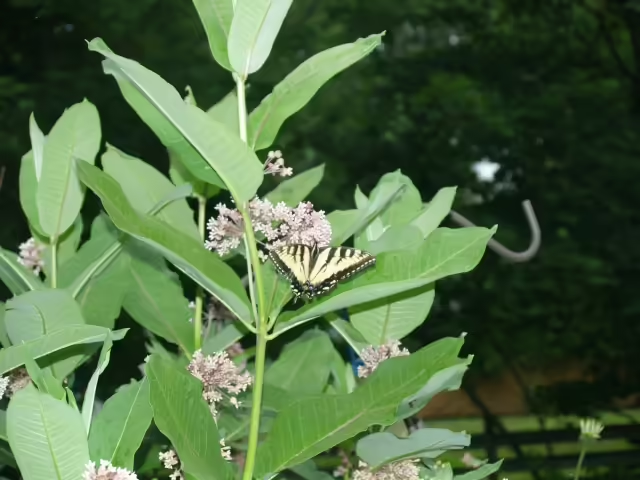
8. Common Milkweed (Asclepias syriaca), a Milkweed for all Conditions
This milkweed is one of the most common in the midwest and northeastern United States. The large leaves provide ample feeding opportunities for monarch butterflies. Common milkweed is a plant for all conditions and can spread by seed or rhizomes, so it should have some space in the garden.
When people think of milkweed, it is often the ubiquitous and invaluable Common Milkweed! Common milkweed is a powerhouse for pollinators and a critical host plant for Monarchs. It’s adaptable, thriving in full sun and a range of soil types, from sandy loams to clay, though it does prefer well-drained conditions. It can be quite vigorous, so we must ask: are we prepared for its potential to spread?
For companions in Cumberland County, think of other resilient, sun-loving perennials. Black-Eyed Susan (Rudbeckia hirta) is a classic choice, offering a different flower form and overlapping bloom time. Various goldenrods (Solidago species like Solidago sempervirens – Seaside Goldenrod, which is salt-tolerant, or Solidago nemoralis – Gray Goldenrod for drier spots) would provide crucial late-season nectar. For a grassy element, Indiangrass (Sorghastrum nutans) could stand tall alongside it, if space permits. The key is to plant it where its spreading nature is an asset or where it can be managed such as large field.
Facts about Common Milkweed
- Native to Maine: Yes, throughout (Kartesz 2015)
- Native to Cumberland County: Yes
- Natural Habitat: fields, pastures, roadsides
- Height: up to 6 ft (1.8 m)
- Flower Color: pink, greenish-purple, greenish-white, to white
- Flowering Period: June to August
- USDA Hardiness Zone: 3-9
Gardening with Common Milkweed
In your Cumberland County, ME butterfly garden, this milkweed needs full sun to part shade and soils that are well-drained to occasionally dry.
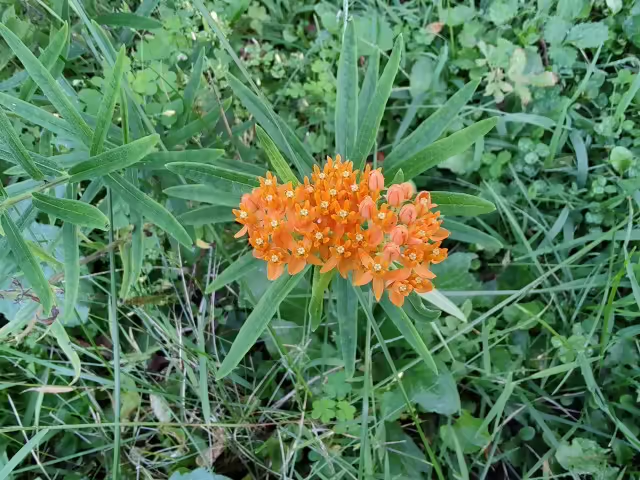
9. Butterfly Weed (Asclepias tuberosa), a Milkweed for all Conditions
Butterfly weed is one of three milkweeds in the United States that has an orange colored flower and is one of two that has a milky sap. The orange flowers this is plant are iconic and make it a favorite as well as its abilities to handle most garden conditions.
Butterfly Weed (Asclepias tuberosa) is a truly spectacular plant with its brilliant orange (sometimes yellow) flowers, and it’s a fantastic choice for Cumberland County’s sun-baked, sandy, and well-drained soils on the coast. It’s quite drought-tolerant once established. What companions would suit this sun-lover? Consider pairing it with Lance-leaved Coreopsis (Coreopsis lanceolata) for a cheerful yellow-orange combination.
Pearly Everlasting (Anaphalis margaritacea) offers silvery foliage and white flowers, creating a nice contrast and also serving as a host plant for the American Lady butterfly. For a low-growing companion, Wild Thyme (Thymus serpyllum, though not native, it’s well-behaved and a pollinator magnet) or perhaps native Prickly Pear cactus (Opuntia humifusa), if you’re embracing truly xeric conditions, could work. Ensuring excellent drainage is paramount for A. tuberosa.
Facts about Butterfly Weed
Asclepias tuberosa subsp. tuberosa in Maine
- Native to Maine: Yes, historic to ME (Kartesz 2015)
- Native to Cumberland County: No
- Natural Habitat: fields, roadsides and open woods
- Height: 1 ft (0.3 m) to 3 ft (0.9 m)
- Flower Color: orange
- Flowering Period: June to October
- USDA Hardiness Zone: 3-9
Gardening with Butterfly Weed
In your Cumberland County, ME butterfly garden, this milkweed needs full sun and nearly any soil type.
10. Red-ring Milkweed (Asclepias variegata), a Milkweed for Dry Sandy Soils
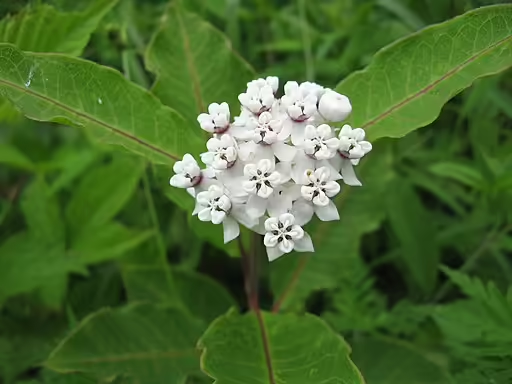
Red-ring milkweed has an interesting flower that is white with a red or purple band. This makes the flower an interesting conversation piece and can be grown in full sun and well-drained soils. In the wild, this milkweed is found in thickets and roadsides.
Asclepias variegata, sometimes known as White Milkweed or Variegated Milkweed, is quite handsome with its white flowers and is often tinged with purplish rings. This milkweed typically prefers dry to mesic soils in open woods, woodland borders, or clearings, often in part shade but can tolerate more sun if moisture is adequate.
In Cumberland County, a spot with well-drained soil and some protection from the most intense afternoon sun might be ideal. Good companions could include Bluestem Goldenrod (Solidago caesia), which also appreciates dappled light and blooms in the fall. For a spring bloomer in such a setting, consider Wild Geranium (Geranium maculatum). If the soil is on the acidic side, Lowbush Blueberry (Vaccinium angustifolium) could be a productive and ecologically valuable partner. Generally, you want to aim for a woodland edge habitat.
Facts about Red-ring Milkweed
- Native to Maine: No (Kartesz 2015)
- Native to Cumberland County: No
- Natural Habitat: thickets and roadsides
- Height: 1 ft (0.3 m) to 4 ft (1.2 m)
- Flower Color: white with a ring of purple to red at the base
- Flowering Period: May to July
- USDA Hardiness Zone: 3-9
Gardening with Red-ring Milkweed
In your Cumberland County, ME butterfly garden, this milkweed needs part-sun to light-shade and dry sandy or rocky soils.
11. Whorled Milkweed (Asclepias verticillata), a Milkweed for Medium to Dry Soil
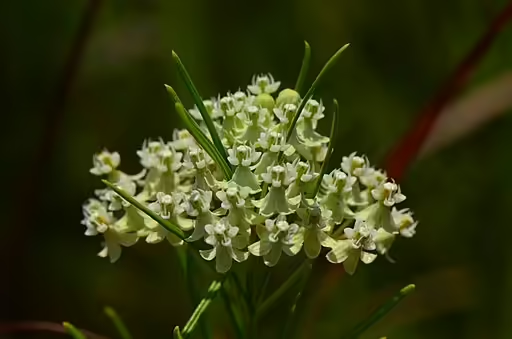
Whorled milkweed has narrow-leaves providing an interesting textual contrast to gardens. If you have average to dry soils and full sun to part-shade this species could live in your garden.
Whorled Milkweed (Asclepias verticillata) is a delightful, fine-textured plant that thrives in full sun and dry to medium, well-drained soils, often in prairies, glades, and open disturbed areas. Its slender profile and greenish-white flowers are attractive to a wide range of smaller pollinators.
Given its preference for leaner conditions, it would pair wonderfully with some of the smaller native grasses like Poverty Oat Grass (Danthonia spicata) or Purple Lovegrass (Eragrostis spectabilis), which adds late-season color. Aromatic Aster (Symphyotrichum oblongifolium) could provide late-season nectar and thrives in similar sunny, drier spots. For a very low companion, perhaps Field Pussytoes (Antennaria neglecta). The fine texture of A. verticillata provides a wonderful contrast to broader-leaved plants.
Facts about Whorled Milkweed
- Native to Maine: No (Kartesz 2015).
- Native to Cumberland County: Yes
- Natural Habitat: meadows and fields
- Height: 1 ft (0.3 m) to 3 ft (0.9 m)
- Flower Color: green to white flowers
- Flowering Period: May to September
- USDA Hardiness Zone: 3-9
Gardening with Whorled Milkweed
In your Cumberland County, ME butterfly garden, this milkweed needs full sun to part-shade and medium to dry soil.
12. Green Comet Milkweed (Asclepias viridiflora), a Milkweed for Medium to Dry Sandy Soils
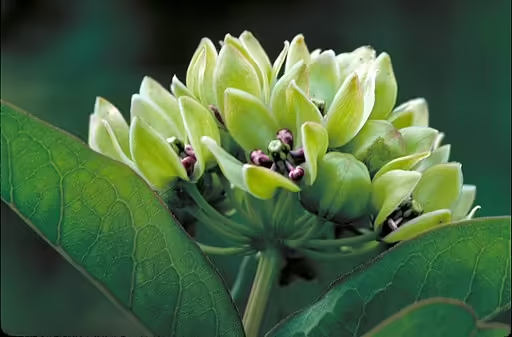
Green comet milkweed is a milkweed having two different flower colors depending on the age. Thriving in full sun to part shade and average to dry sandy soils, this could be an excellent addition to your garden and provide leafy interest.
Also known as Green milkweed, Asclepias viridiflora is typically found in prairies, glades, and open woodlands, preferring full sun and dry to mesic, often calcareous soils, though it can tolerate sandy and gravelly sites as well. Its greenish, uniquely shaped flowers are quite intriguing. In Cumberland County, ME, finding a spot with full sun and excellent drainage would be crucial.
Good companions would be those that don’t mind these drier, leaner conditions. Consider Hoary Vervain (Verbena stricta), a tough plant with upright purple flower spikes. Spotted Bee Balm (Monarda punctata) is another excellent choice for sandy soils, attracting a fascinating array of wasps and bees. Little Bluestem (Schizachyrium scoparium) would again be an appropriate grass, reinforcing that prairie-like feel. The subtlety of its green flowers lends itself to being planted in places it where it can be appreciated up close.
Facts about Green Comet Milkweed
- Native to Maine: No (Kartesz 2015)
- Native to Cumberland County: No
- Natural Habitat: meadows and fields
- Height: 1 ft (0.3 m) to 3 ft (0.9 m)
- Flower Color: green, aging to yellow with a purple tinge
- Flowering Period: June to August
- USDA Hardiness Zone: 3-9
Gardening with Green Comet Milkweed
In your Cumberland County, ME butterfly garden, this milkweed needs full sun to part-shade and medium to dry soil.
When selecting your Cumberland County, ME milkweeds, make sure that it grows in your zone and habitat.
Books where you can find out more about Monarchs and Butterfly Gardening in Cumberland County, ME
- Clausen, Ruth Rogers and Gregory D. Tepper. 2021. Deer-Resistant Plants for the Northeast. Little and Brown. 208 pp.
- Crow, Garrett C. and C.B. Hellquist. 2023. Aquatic and Wetland Plants of Northeastern North America. University of Wisconsin Press. 952 pp.
- Cullina, William. 2000. The New England Wild Flower Society Guide to Growing and Propagating Wildflowers of the United States and Canada. Houghton Mifflin Harcourt. 336 pp.
- DeMaynadier, Philip G., et al. 2023. Butterflies of Maine and the Canadian Maritime Provinces. Cornell University Press. 456 pp.
- Heffeman, Maureen. 2023. Native Plants for your Maine Garden. Down East Books. 128 pp.
- Heizer, Roy and Nancy Heizer. 2013. Coastal Garden Plants – Maine to Maryland. Schiffer Publishing, Ltd. 160 pp.
- Kazak, Anne M. and Susan S. Leiter. 2016. The Wild Gardens of Acadia – Images of Modern America. Arcadia Publishing, Inc. 95 pp.
- Lorimer, Uli. 2022. The Northeast Native Plant Primer: 235 Plants for an Earth-Friendly Garden. Timber Press. 252 pp.
- Playfair, Susan R. 2014. America’s Founding Fruit: The Cranberry in a New Environment. University Press of New England. 240 pp.
Affiliate Disclosure: When you click on links to various merchants on this site and make a purchase, this site can earn a commission at no extra cost to you. Affiliate programs include, but are not limited to, the eBay Partner Network, Thriftbooks, and Blackwell’s Books.
References for Cumberland County, ME Milkweeds
- Kartesz, J.T., The Biota of North America Program (BONAP). 2015. North American Plant Atlas. (http://bonap.net/napa). Chapel Hill, N.C. [maps generated from Kartesz, J.T. 2015. Floristic Synthesis of North America, Version 1.0. Biota of North America Program (BONAP). (in press)].