Table of Contents for San Diego County, CA Native or Nearly Native Milkweeds
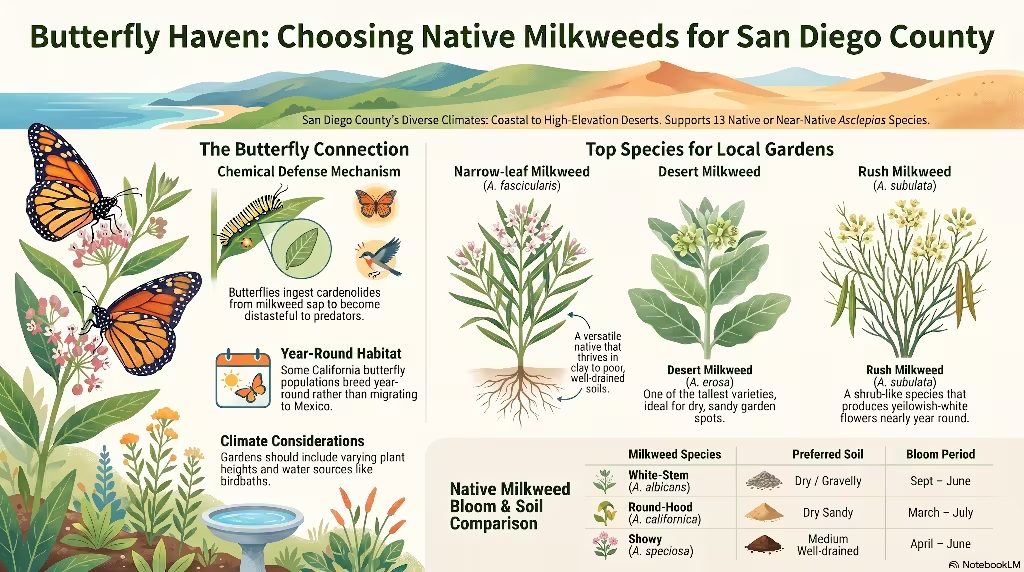
There are thirteen species of native or nearly native San Diego County, CA milkweeds (Asclepias spp.) that can be grown for butterflies and other insects. Milkweeds are an important host species for monarch butterflies and others in California. The monarch butterfly in particular uses the cardenolides found in the milky sap of milkweeds to give an unpleasant taste to predators. These plants are also an important nectar source to all insects visiting your pollinator garden.
San Diego County, CA Milkweeds at a Glance
General Information about Native Plant and Pollinator Gardens
When planting a native plant and pollinator garden in San Diego County, CA, you need to ensure that you have a selection of plants providing blooms at different times of the year. In addition to the plants, you need to have a source of water such as a birdbath or water feature, shelter for visitors, and nesting and perching locations for birds. Be sure to also include plants of different heights for perching. Resources you can use for more information on butterfly gardening in San Diego County, CA include the California Native Plant Society (CNPS) – San Diego Chapter, San Diego Natural History Museum, The Xerces Society, and the San Diego Botanic Garden.
Location of San Diego County, California
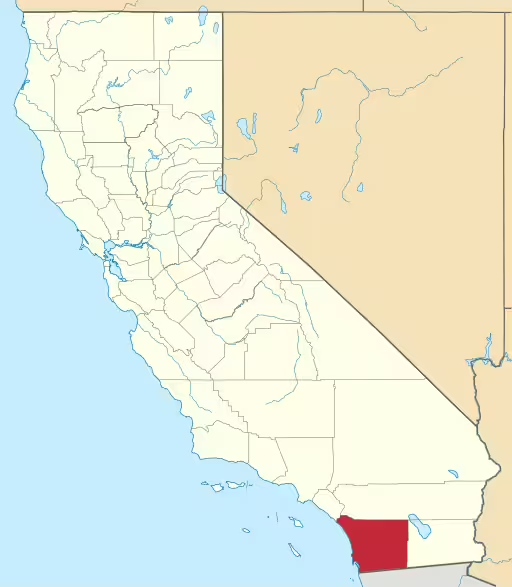
San Diego County is located in southwest California. San Diego is the largest city in the county.
USDA Plant Hardiness Zones in San Diego County, California
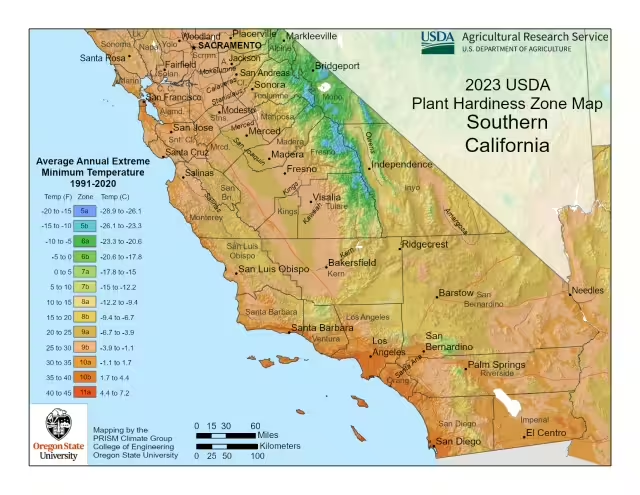
San Diego County, California is located within three Plant Hardiness Zones 8a in the center high elevations to 11a along the coast. When selecting plants in San Diego County you will want to select plants that can handle a range of +100F to +400F depending on elevation and proximity to the coast.
Butterflies in San Diego County, CA that are Hosted by Milkweeds (Asclepias spp.)
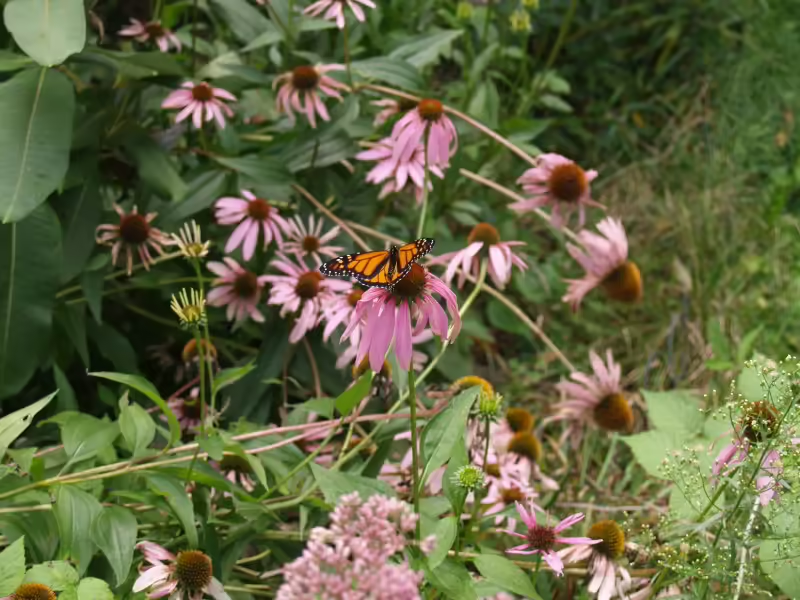
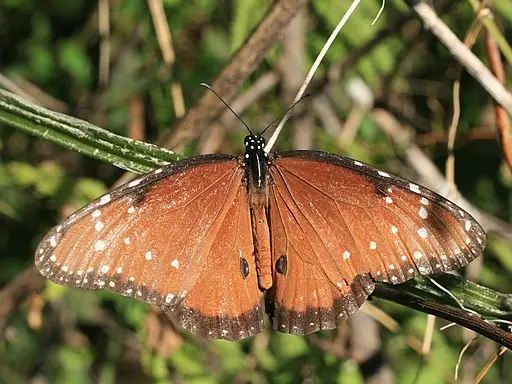
Monarch Butterfly (Danaus plexippus)
The monarch butterfly is an iconic butterfly in North America and is a bell-weather of the environment. Having a distinctive orange color with black stripes, this butterfly has a wingspan of 3 in (7.6 cm) to 5 in (12.7 cm). The monarch butterfly uses milkweed to get cardenolides, a toxin that is distasteful to predators. This butterfly can have several flights a year and is known for its migrations to Mexico each year. However, some populations in California, Arizona, and Florida do not migrate and breed year-round (Urguhart, et al 1968).
Queen Butterfly (Danaus gilippus)
The Queen Butterfly is similar to the Monarch Butterfly, but is more of a solid orange color with a brownish hue, especially along the edges. When the wings are closed and the underside is shown it looks almost like the monarch. However this butterfly is generally smaller than the monarch having a wingspan of 2.5 in (6.4 cm) to 4 in (10.2 cm). The queen butterfly is a mimic of the monarch and the similarity is not by accident, but a rather a defense mechanism. Like the monarch, the queen ingests the cardenolides of the milkweed plants. Unlike the monarch, the queen butterfly does not migrate.
List of Milkweeds that are Native or Nearly Native in San Diego County, California
1. White-Stem Milkweed (Asclepias albicans), a Milkweed for Dry Soils
White-Stem milkweed is a shrubby perennial that grows in dry areas such as deserts and gravelly sparsely vegetated places. This species needs a full sun exposure and a lot of lateral space for spreading. The greenish to white flowers have hints of brown, pink, or purple giving a creamy appearance. If planted in San Diego County, it may be good to plant it in shade to ensure longer term survival from climate change heat stress. Suitable companion plants to this species include bladderpod (Peritoma arborea), brittlebush (Encelia farinosa), sweetbush (Bebbia juncea), chuparosa (Justicia californica), and desert globemallow (Sphaeralcea ambigua).
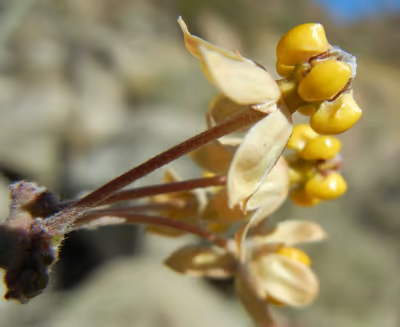
Facts about White-Stem Milkweed
- Native to California: Yes, southern counties (Kartesz 2015)
- Native to San Diego County: Yes
- Natural Habitat: deserts and gravelly sparsely vegetated places
- Height: up to 3 ft (1 m) to 12 ft (4 m)
- Flower Color: greenish to white with hints of brown, pink, or purple The flower can turn yellowish with age (Felger, et al 2014)
- Flowering Period: September to June (nearly year-round)
- USDA Hardiness Zone: 9-11
Gardening with White-Stem Milkweed
In your San Diego County, CA butterfly garden, this milkweed needs full sun and sandy to dry rocky soils.
2. Arizona Milkweed (Asclepias angustifolia), a Milkweed for Dry Soils
Arizona milkweed is a somewhat suffrutescent perennial that generally needs partial shade but can grow in full sun. It likes dry soils. The white flowers have a tinge of pink or purple. This species does not occur in California, but it can handle the plant hardiness zone of San Diego. Suitable companion plants include Willowy monardella (Monardella viminea), sticky monkeyflower (Diplacus aurantiacus), California goldenrod (Solidago velutina ssp. californica), blue-eyed grass (Sisyrinchium bellum), and deergrass (Muhlenbergia rigens).
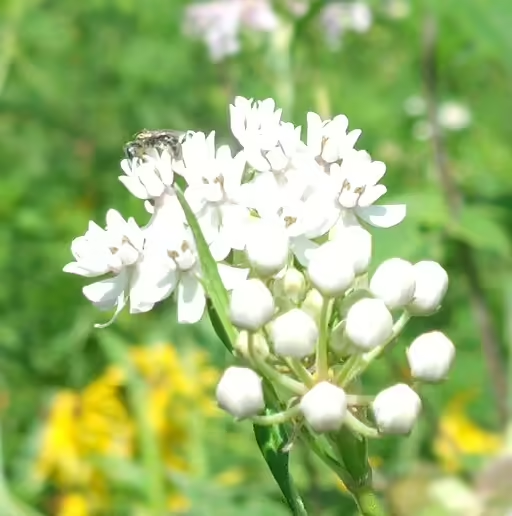
Facts about Arizona Milkweed
- Native to California: No (Kartesz 2015)
- Native to San Diego County: No
- Natural Habitat: deserts and gravelly sparsely vegetated places
- Height: up to 3 ft (1 m)
- Flower Color: white with a tinge of pink or purple
- Flowering Period: June to July, can flower year-round (Woodson 1954)
- USDA Hardiness Zone: 7-10
Gardening with Arizona Milkweed
In your San Diego County, CA butterfly garden, this milkweed needs partial shade, but can handle full sun and dry soils.
3. Spider Milkweed (Asclepias asperula), a Milkweed for Dry and/or Rocky Soils
Spider milkweed is a herbaceous perennial that grows best in dry and/or rocky soils that have full sun. Plants should have plenty of spacing to ensure air circulation. Potential companion plants in the garden include California buckwheat (Eriogonum fasciculatum), white sage (Salvia apiana), desert globemallow (Sphaeralcea ambigua), purple three-awn (Aristida purpurea), and showy penstemon (Penstemon spectabilis).
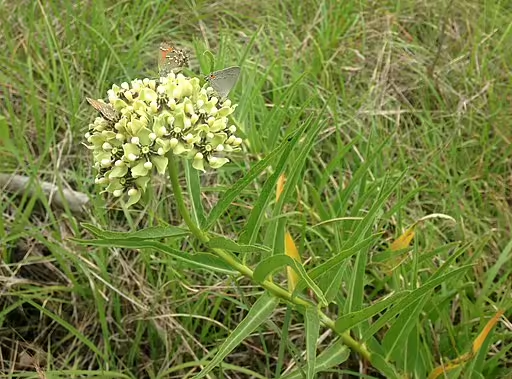
Facts about Spider Milkweed
Asclepias asperula spp. asperula in California
- Native to California: Yes, rare in San Bernardino County counties (Kartesz 2015)
- Native to San Diego County: No
- Natural Habitat: open areas that are dry, rocky, sandy or on desert swales with scrub oaks. They can also be found on pasturelands (Karges 2018).
- Height: 1 ft (0.3 m) to 3 ft (1.0 m)
- Flower Color: yellowish-green (Woodson 1954), hood is dark purple in ssp. asperula and cream-green in ssp. capricornu (Jepson eflora)
- Flowering Period: March to September
- USDA Hardiness Zone: 5-9
Gardening with Spider Milkweed
In your San Diego County, CA butterfly garden, this milkweed needs full sun and dry rocky soils. It best planted in interior parts of the county away from the coast.
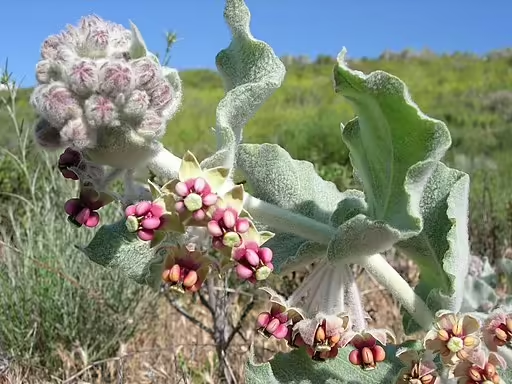
4. Round-Hood Milkweed (Asclepias californica), a Milkweed for Dry Soils
Round-Hood milkweed is a herbaceous perennial that enjoys full sun and dry sandy soils. Plants should be spaced at least 1-2 feet apart in order to have adequate air circulation. Companion plants in the garden can include wolly bluecurls (Trichostema lanatum), Cleveland sage (Salvia clevelandii), chalk liveforever (Dudleya pulverulenta), coast sunflower (Encelia californica), and purple needlegrass (Stipa pulchra). These plants will provide nearly year-round color and attract a variety of pollinators.
Facts about Round-Hood Milkweed
Asclepias calfornica spp. californica (southern), A.californica ssp. greenei (northern)
- Native to California: Yes, central and southern counties (Kartesz 2015)
- Native to San Diego County: Yes
- Natural Habitat: open areas such as grassy slopes, roadsides, pastures, woodlands, and disturbed places
- Height: 2 ft (0.6 m) to 4 ft (1.2 m)
- Flower Color: white, pink, lavender, green (Hall 1921), purple (Jepson eflora), red (wildflower.org), maroon (California Native Plant Society 2006) and violet (Las Pilitas Nursery)
- Flowering Period: March to July
- USDA Hardiness Zone: 7-10
Gardening with Round-Hood Milkweed
In your San Diego County, CA butterfly garden, this milkweed needs full sun and sandy soil. It will likely do best away from the coastal areas.
5. Heart-leaf Milkweed (Asclepias cordifolia), a Milkweed for Full Sun to Part Shade and Mesic to Dry Well-drained Soils
Heart-leaf milkweed is a herbaceous perennial that requires full sun to part shade and mesic to dry well-drained soil. It has purple, red, violet, or lavender flowers that bloom from March to August. Suitable companions for this species in San Diego County include coyote mint (Monardella villosa), golden yarrow (Eriophyllum confertifolium), scarlet bugler (Penstemon centranthifolius), Eastwood manzanita (Arctostaphylos glandulosa), and wollyleaf ceanothus (Ceanothus tomentosus).

observed in United States of America
by sgene (licensed under CC0 1.0)
Facts about Heart-leaf Milkweed
- Native to California: Yes, northern and central counties (Kartesz 2015)
- Native to San Diego County: No
- Natural Habitat: shaded woodlands that dry, rocky and sloping (gardenia.net), decomposed granite (Calscape), talus slopes (Woodson 1954), steep grassy hills (Kelch and Murdock 2012)
- Height: 1 ft (0.3 m) to 4 ft (1.2 m)
- Flower Color: purple, red, violet, or lavender
- Flowering Period: March to August
- USDA Hardiness Zone: 7-10
Gardening with Heart-leaf Milkweed
In your San Diego County, CA butterfly garden, this milkweed needs full sun to part shade and mesic to dry well-drained soil.
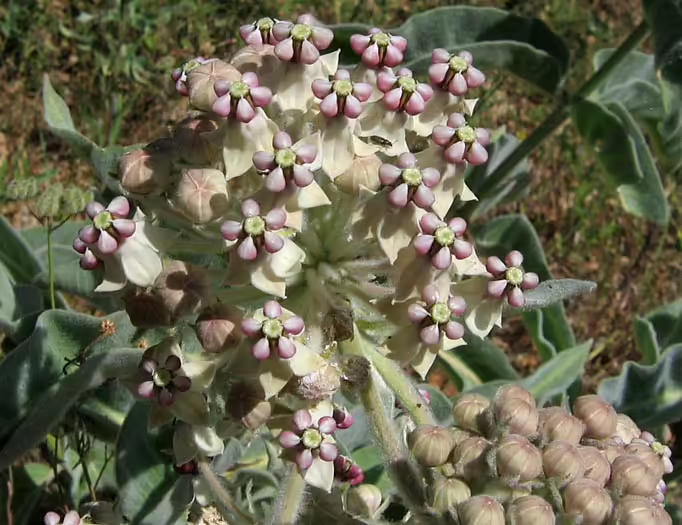
6. Woollypod Milkweed (Asclepias eriocarpa), a Milkweed for Mesic to Dry Well-drained Soils
Woollypod milkweed is a herbaceous perennial that requires mesic to dry well-drained soils with full sun to part shade exposure. Potential companions in a butterfly garden that will provide a variety of color and texture include San Diego sunflower (Bahiopsis laciniata), California fuchsia (Epilobium canum), California aster (Corethrogyne filaginifolia), chaparral mallow (Malacothamnus fasciculatus), and California Wishbone Bush (Mirabilis laevis var. crassifolia). Be aware that this plant may experience heat stress from climate change warming since it is at the upper range of it hardiness zone, especially in the coastal zones of the county.
Facts about Woollypod Milkweed
- Native to California: Yes, generally throughout (Kartesz 2015)
- Native to San Diego County: Yes
- Natural Habitat: rocky hillsides, deserts, open woods, fields, roadside, and other dry areas
- Height: 2 ft (0.6 m) to 4 ft (1.2 m)
- Flower Color: greenish to yellowish-white with a tinge of rose (Woodson 1954) or pink (Calscape)
- Flowering Period: May to October
- USDA Hardiness Zone: 4-9
Gardening with Woollypod Milkweed
In your San Diego County, CA butterfly garden, this milkweed needs full sun to part shade and medium to dry well-drained soil. Even though this milkweed is native to the area, it may experience heat stress in the future from climate change warming since it is at the upper limit of its hardiness range, especially in coastal areas.
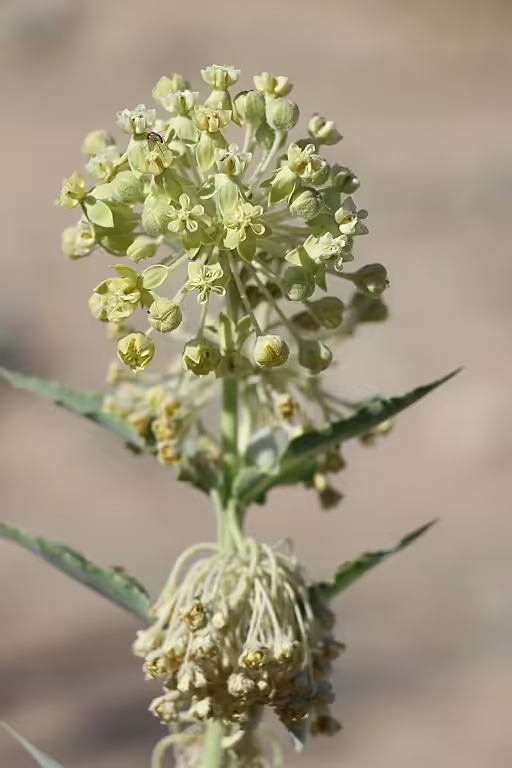
7. Desert Milkweed (Asclepias erosa), a Milkweed for Dry Sandy Soils
Desert milkweed is herbaceous perennial that likes dry sandy soils in full sun or partial sun. It is one of the tallest milkweeds in the United States. The white to cream flowers bloom from April to October. Potential companion species include brittle bush (Encelia farinosa), chuparosa (Justicia californica), desert marigold (Baileya multiradiata), desert lavender (Condea emoryi), and desert willow (Chilopsis linearis).
Facts about Desert Milkweed
- Native to California: Yes (Kartesz 2015)
- Native to San Diego County: Yes
- Natural Habitat: washes, roadsides, and sandy plains
- Height: 1 ft (0.3 m) to 4 ft (1.2 m)
- Flower Color: white, cream, green to yellow with greenish-white to yellow-brown hoods
- Flowering Period: April to October
- USDA Hardiness Zone: 4-10
Gardening with Desert Milkweed
In your San Diego County, CA butterfly garden, this milkweed needs full sun to partial sun and dry sandy soil.
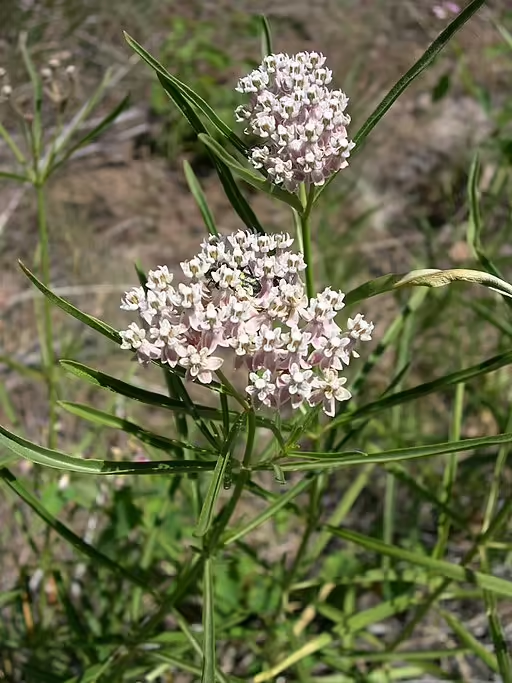
8. Narrow-leaf Milkweed (Asclepias fascicularis), a Milkweed for Clay to Poor Well-drained Soils
Narrow-leaf milkweed is a herbaceous perennial that needs full sun and thrives in clay to poor well-drained soils. Other species that would compliment this species in the garden include California goldenrod (Solidago velutina ssp. californica), sticky monkeyflower (Diplacus aurantiacus), western vervain (Verbena lasiostachys), California yarrow (Achillea milllefolium), and Pacific aster (Symphyotrichum chilense).
Facts about Narrow-leaf Milkweed
- Native to California: Yes, southern and scattered northern counties (Kartesz 2015)
- Native to San Diego County: Yes
- Natural Habitat: grasslands, pastures, roadsides, disturbed areas, and woodlands in valleys and plains
- Height: 1 ft (0.3 m) to 3.5 ft (1.1 m)
- Flower Color: grayish-pink to white (Woodson 1954), lavender to lavender-white (Calscape), white to peach (Ljubenkov and Ross 2002) or greenish-white (Jepson eflora)
- Flowering Period: May to October
- USDA Hardiness Zone: 6-10
Gardening with Few-flower Milkweed
In your San Diego County, CA butterfly garden, this milkweed needs full sun to part sun and clay to poor well-drained soil.
9. Mojave Milkweed (Asclepias nyctaginifolia), a Milkweed for Dry Sandy Soils
Mojave milkweed is a herbaceous perennial that requires full sun and dry sandy soils. The greenish-white to greenish-yellow flowers bloom from April to October. Possible companion plants to compliment this species include sweetbush (Bebbia juncea), mojave woody aster (Xylorhiza tortifolia), mojave sage (Salvia mohavensis), desert globemallow (Sphaeralcea ambigua), and desert apricot (Prunus fremontii).
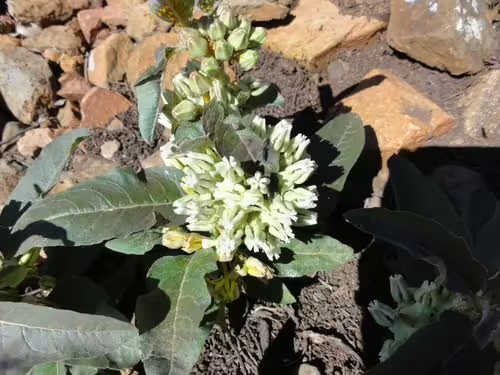
collected in United States of America
by Utah State University (licensed under CC0 1.0)
Facts about Mojave Milkweed
- Native to California: Yes, rare in San Bernardino County (Kartesz 2015)
- Native to San Diego County: No
- Natural Habitat: washes and hillsides, dry slopes (Abrams and Ferris 1951), desert, roadsides, open woodlands (Arizona Cooperative Extension), grasslands (McLaughlin 2006), swales (Woodson 1954), and mesas (Verrier 2018)
- Height: 0.5 ft (0.2 m) to 1.75 ft (0.5 m)
- Flower Color: greenish-white to greenish-yellow
- Flowering Period: April to October
- USDA Hardiness Zone: 7-9
Gardening with Mojave Milkweed
In your San Diego County, CA butterfly garden, this milkweed needs full sun and dry, sandy soils. This species may experience heat stress in the future due to climate induced warming since it is at the upper limit of it hardiness.
10. Showy Milkweed (Asclepias speciosa), a Milkweed for Medium Well-drained Soils
Showy milkweed is a herbaceous perennial and one of the most commonly planted milkweeds. It is a small to medium sized plant that can be used in containers. Potential companion plants include . This species would make a good long-term choice in light of climate change since it can exist two zones higher in hardiness.
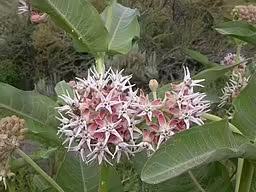
Facts about Showy Milkweed
- Native to California: Yes, central and northern counties (Kartesz 2015)
- Native to San Diego County: No
- Natural Habitat: roadsides, fields, and woodlands
- Height: 1 ft (0.3 m) to 3 ft (1 m)
- Flower Color: purple to pink
- Flowering Period: April to June
- USDA Hardiness Zone: 3-9
Gardening with Showy Milkweed
In your San Diego County, CA butterfly garden, this milkweed needs full sun and medium to well-drained soil. This species can currently handle the plant hardiness zone of the interior parts of county. However, in the future it may have stress from climate change induced warming.
11. Rush Milkweed (Asclepias subulata), a Milkweed for Dry Sandy and Gravelly Soils
Rush milkweed is a subshrub that likes full sun and dry sandy and gravelly soils. The yellowish-white to cream flowers bloom year-round. Suitable companion plants include chuparosa (Justicia californica), fairyduster (Calliandra eriophylla), sweetbush (Bebbia juncea), desert globemallow (Sphaeralcea ambigua), brittlebush (Encelia farinosa).
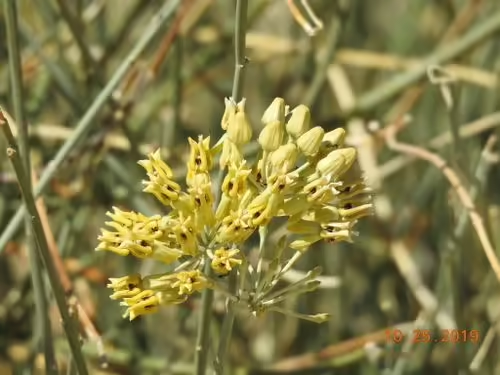
observed in United States of America
by Diana (licensed under CC BY 4.0)
Facts about Rush Milkweed
- Native to California: Yes, southern counties (Kartesz 2015)
- Native to San Diego County: Yes
- Natural Habitat: washes and arroyos (Jepson eflora), benches of slopes (Roberts, et al 1998), sandy flats (McLaughlin 1987), and roadsides (Felger 2014)
- Height: 3 ft (1 m) to 6 ft (2 m)
- Flower Color: yellowish-white to cream with waxy appearance
- Flowering Period: Year-round
- USDA Hardiness Zone: 9-11
Gardening with Rush Milkweed
In your San Diego County, CA butterfly garden, this milkweed needs full sun and dry sandy or gravelly soils.
12. Butterfly Weed (Asclepias tuberosa), a Milkweed for Medium to Moist Sandy Well-drained Soils
Butterfly Weed is a herbaceous perennial that enjoys full sun and can handle most soil conditions. In the United States, it is one of two milkweeds, that does not produce milky sap. Possible companion plants in a butterfly garden with butterfly weed include red buckwheat (Eriogonum grande var. rubescens), Cedros Island verbena (Verbena lilacina), Cleveland sage (Salvia clevelandii), California Yarrow (Achillea millefolium), and desert globemallow (Sphaeralcea ambigua).
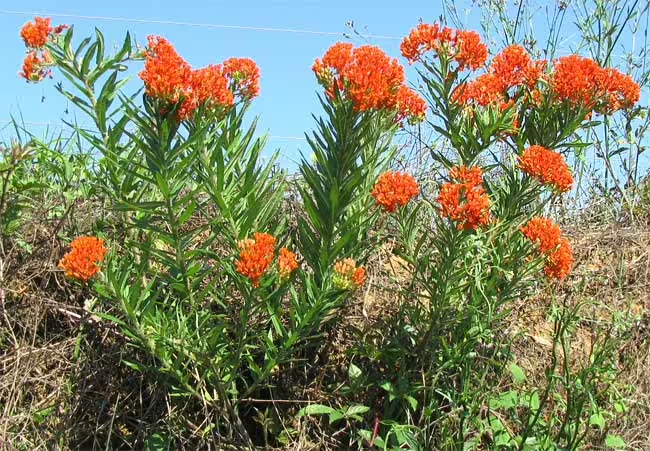
Facts about Butterfly Weed
- Native to California: No, adventive in two counties (Kartesz 2015)
- Native to San Diego County: No
- Natural Habitat: fields, roadsides, and open woods
- Height: 1 ft (0.3 m) to 3 ft (1.0 m)
- Flower Color: orange, sometimes yellow
- Flowering Period: June to October
- USDA Hardiness Zone: 3-9
Gardening with Butterfly Weed
In your San Diego County, CA butterfly garden, this milkweed needs full sun and tolerate most soils. Because of its hardiness range, it will likely do best in the interior parts of San Diego County. It may experience heat stress in the future from climate change warming.
13. Woolly Milkweed (Asclepias vestita), a Milkweed for Well-drained Soils
Woolly milkweed is a herbaceous perennial that needs full sun and well-drained soils. The yellowish-white to greenish-white flowers bloom from April to July. Companion plants to this species include California buckwheat (Eriogonum fasciculatum), Cleveland’s Beardtongue (Penstemon clevelandii), desert globemallow (Sphaeralcea ambigua), San Diego sunflower (Bahiopsis laciniata), and California fuchsia (Epilobium canum).
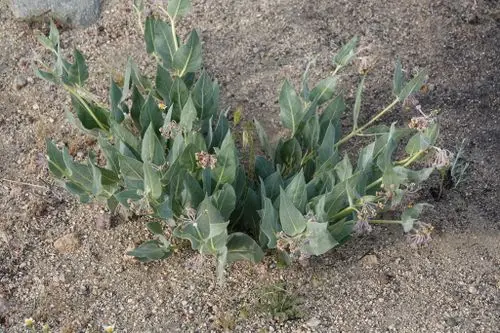
observed in United States of America
by Kimball Garrett (licensed under http://creativecommons.org/publicdomain/zero/1.0/)
Facts about Woolly Milkweed
Asclepias vestita var. parishii and A. vestita var. vestita in California
- Native to California: Yes, in central and southern counties, endemic to California in US (Kartesz 2015)
- Native to San Diego County: No, native in adjacent counties
- Natural Habitat: dry plains, canyons, and chapparal
- Height: 1.5 ft (0.5 m) to 3 ft (1.0 m)
- Flower Color: yellowish-white or greenish-white with a purple tint
- Flowering Period: April to July
- USDA Hardiness Zone: 7-10
Gardening with Woolly Milkweed
In your San Diego County, CA butterfly garden, this milkweed needs full sun to partial-sun and well-drained soils.
When selecting your San Diego County, CA milkweed(s), be sure to make sure that it grows in your zone and habitat.
Books where you can find out more about Monarchs and Butterfly Gardening in San Diego County, CA
- Bauer, Nancy. 2012. The California Wildlife Habitat Garden: How to Attract Bees, Butterflies, Birds, and Other Animals. University of CA Press.
- Bornstein, Carol. 2005. California Native Plants for the Garden. Cachuma Press.
- Bornstein, Carol. 2011. Reimagining the California Lawn: Water-Conserving Plants, Practices, and Designs. Cachuma Press.
- Brown, Brian V. and Julian P. Donahue. 1999. Butterfly Gardening in Southern California. Natural History Museum of LA County.
- California Native Plant Society. 1997. California’s Wild Gardens: A Living Legacy. California Native Plant Society.
Affiliate Disclosure: When you click on links to various merchants on this site and make a purchase, this site can earn a commission at no extra cost to you. Affiliate programs include, but are not limited to, the eBay Partner Network and Blackwell’s Books.
References for San Diego County, CA Milkweeds
- Abrams, Le Roy and Roxana S. Ferris. 1951. An Illustrated flora of the Pacific States: Washington, Oregon, and California. (Stanford University: Stanford University Press).
- California Native Plant Society. 2006. In the field section. Mimulus Memo Fall 2006.
- Felger, R.S., S. Rutman, and J. Malusa. 2014. Ajo Peak to Tinajas Atlas: Flora of Southwestern Arizona Part 8. Eudicots: Acanthaceae – Apocynaceae. Phytoneuron 85: 1-71.
- Hall, Harvey Monroe. 1921. Rubber Content of North American Plants. Carnegie Institution of Washington publication 313.
- Karges, Joann. 2018. From Weed to Wondrous. Natural History 126 (6): 36-41.
- Kelch, Dean G. and Andrew Murdock. 2012. Flora of the Carquinez Strait Region, Contra Costa and Solano Counties, California. Madrono 59: 47-108.
- Ljubenkov, Juile A. and Timothy S. Ross. 2002. An Annotated Checklist of the Vascular Plants of the Whittier Hills, Los Angeles County, California. Crossosoma 27(1): 1-23.
- McLaughlin, Steven P. 2006. Vascular Flora of Sonoita Creek State Natural Area and San Rafael State Park: Arizona’s First Natural-Area Parks. Sida 22: 661-704.
- Roberts, Fred M., Grant Fletcher, Steve Boyd, Andrew C. Sanders, Peter Lesica, Peter Husby, Stephen V. Cooper, and Job Kuijt. 1998. Noteworthy Collections. Madrono 45: 326-330.
- Verrier, James T. 2018. Annotated Flora of the Santa Catalina Mountains, Pima, and Pinal Counties, Southwestern Arizona. Desert Plants 33: 5-291.
- Woodson, Robert E. 1954. The North American Species of Asclepias L. Annals of the Missouri Botanical Garden 41: 1-211.