Table of Contents
There are thirteen species of native or nearly native Boston milkweeds (Asclepias spp.) that can be grown for butterflies and other insects. Milkweeds are an important host species for monarch butterflies in Massachusetts. The monarch butterfly in particular uses the cardenolides found in the milky sap of milkweeds to give an unpleasant taste to predators. These plants are also an important nectar source to all insects visiting your pollinator garden.
General Information about Native Plant and Pollinator Gardens
When planting a native plant and pollinator garden in Boston, MA you need to ensure that you have a selection of plants that provide blooms at different times of the year. In addition to the plants, you need to provide a source of water such as a birdbath or water feature, shelter for animals, and nesting locations for birds. Be sure to also include plants of different heights for perching.
Resources you can use for more information on butterfly gardening in Boston, MA include: Native Plant Trust (Framingham, MA), Grow Native Massachusetts (Waltham, MA), and Mass Audubon.
Location of Boston, Massachusetts
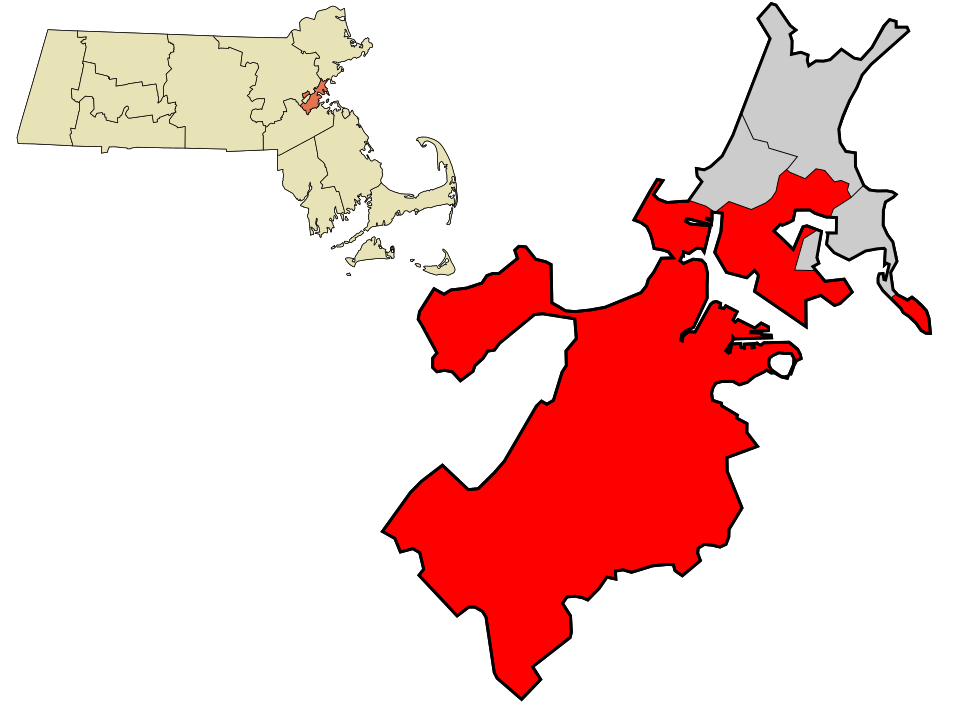
The City of Boston is located in Suffolk County, Massachusetts in the eastern part of the state on Cape Cod Bay. The City of Boston is highlighted in red.
USDA Plant Hardiness Zones in Boston, Massachusetts
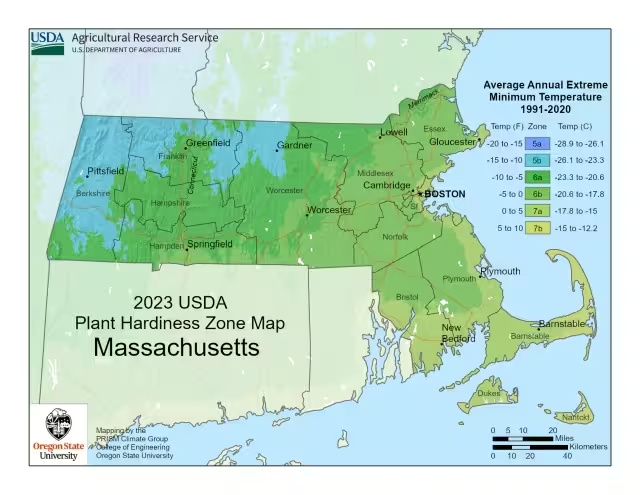
The City of Boston is located within two Plant Hardiness Zones 6b (inland) and 7a (coastal). When selecting plants in Boston you will want to get those that can handle temperatures as cold as -50F.
Butterflies in Boston, MA that are Hosted by Milkweeds (Asclepias spp.)
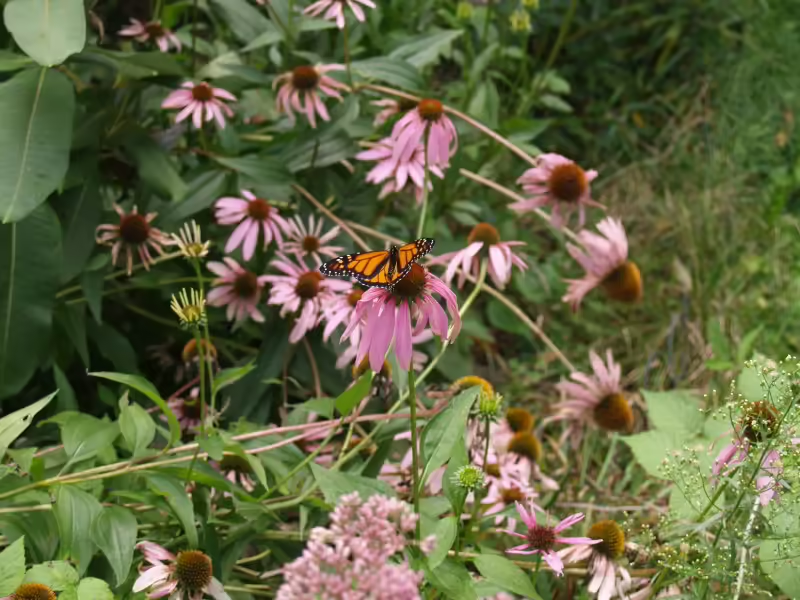
Monarch Butterfly (Danaus plexippus)
The monarch butterfly is an iconic butterfly in North America and is a bell-weather of the environment. Having a distinctive orange color with black stripes, this butterfly has a wingspan of 3 in (7.6 cm) to 5 in (12.7 cm). The monarch butterfly uses milkweed to get cardenolides, a toxin that is distasteful to predators. This butterfly can have several flights a year and is known for its migrations to Mexico each year. However, some populations in California, Arizona, and Florida do not migrate and breed year-round (Urguhart, et al 1968).
Note: There are reports of the Queen Butterfly (Danaus gilippus) in the Boston area, but these occurrences are regarded as strays (Butterflies and Moths of North America).
List of Milkweeds that are Native or Nearly Native in Boston, MA
1. Clasping Milkweed (Asclepias amplexicaulis), a Milkweed for Moist to Dry Soils
Clasping milkweed is found in open to semi-open places such as meadows, savannas, woodlands, and roadsides. While it likes full sun, this plant can handle part-shade and needs well-drained clay, loam, or sandy soil. Reproduction is through seeds and underground rhizomes. The pink to purple flower clusters have about 25 fragrant flowers each.
Clasping Milkweed likes places that are sunny, with a sandy and/or gravelly substrate. The distinct, broad leaves, of clasping milkweed which clasp the stem give it a rather bold architectural presence.
For companion plants, we should look to species that appreciate similar xeric conditions and won’t crowd its unique form. Consider mixing the planting with New England Blazing Star (Liatris scariosa var. novae-angliae), which blooms from August to September and provides nectar for visiting butterflies. Narrowleaf Mountain Mint (Pycnanthemum tenuifolium), which provides a needle texture to the garden and nectar for short-tongues bees. Yellow wild indigo (Baptisia tinctoria) provides yellow, pea-like blossoms in the spring and nitrogen to the soil. Gray goldenrod (Solidago nemoralis) blooms from September to October and provides late season nectar to native bees and butterflies. Little Bluestem (Schizachyrium scoparium) provide pupation areas and turns a copper-orange color in the fall.
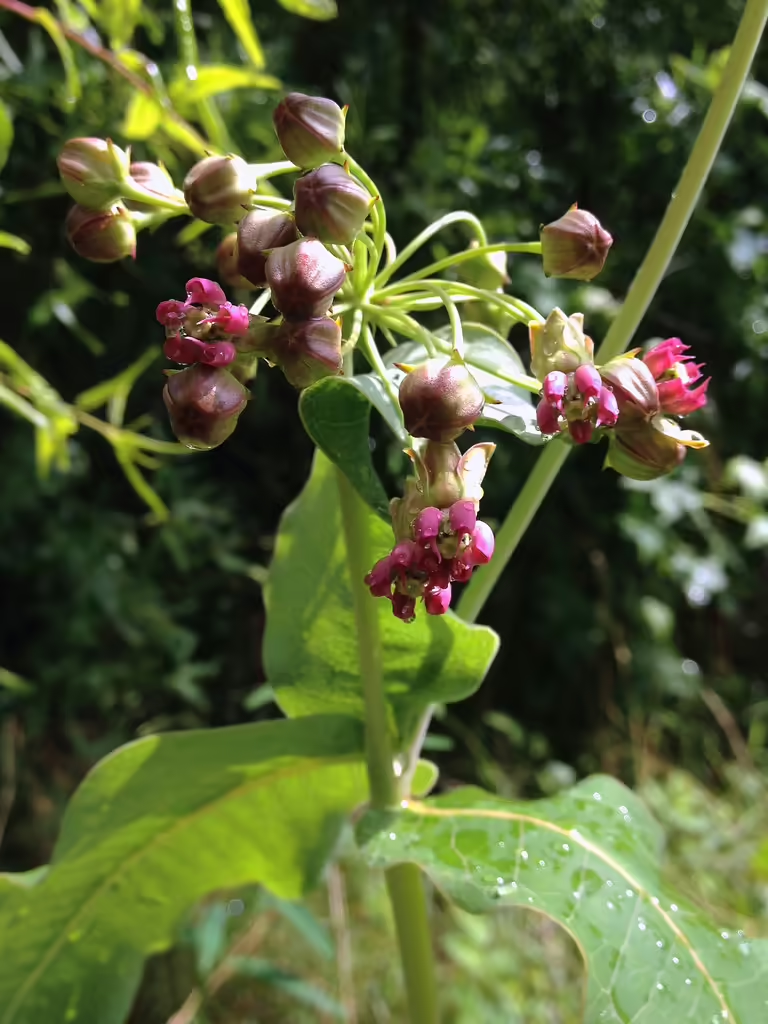
Facts about Clasping Milkweed
- Native to Massachusetts: Yes, throughout (Kartesz 2015)
- Native to Boston, MA: Yes
- Natural Habitat: dry woodlands, meadows, and roadsides
- Height: up to 3 ft (0.9 m)
- Flower Color: greenish-pink, red, brown, to purple
- Flowering Period: March to September
- USDA Hardiness Zone: 3-9
Gardening with Clasping Milkweed
In your Boston, MA butterfly garden, this milkweed needs full sun to part-shade and moist to dry soils.
2. Poke Milkweed (Asclepias exaltata), a Milkweed for Shade and Moist Soils
Poke milkweed is a part-shade to shade loving milkweed, but can handle full sun in a garden setting. A variety of soils such as clay, loamy, and sand that are moderate to wet and are well-drained are needed. The leaves of this milkweed are notable for being dark green with purplish veins.
Poke milkweed presents a slightly different challenge and opportunity as compared to other milkweeds. Unlike its sun-loving cousins, Asclepias exaltata typically prefers the dappled light and richer, moister soils of woodland edges or clearings. So, if you have such a spot your Boston, MA property, perhaps with a bit more loam or humus, it could thrive. Its tall stature and drooping umbels of greenish-white to pale pink flowers are quite distinct.
Suitable companion plants would be those that share this affinity for partial shade and mesic conditions. Think about plants like golden alexanders (Zizia aurea) to provide early spring color, a landing place for short-tongued bees, and a host plant for black swallowtails (Papilo polyxenes). Great blue lobelia (Lobelia siphilitica) that blooms from August to October and provides nectar for native bumblebees. Black Cohosh (Actaea racemosa) to give height to the garden, attract solitary bees, and a food source for the Appalachian Azure butterfly (Celastrina neglectamajor). Blue Wood Aster (Symphyotrichum cordifolium) to provide a late source of nectar from September to November. Finally, you could add northern sea oats (Chasmanthium latifolium) to give a place for pupa formation. Just be careful this species does get out of control in the garden.
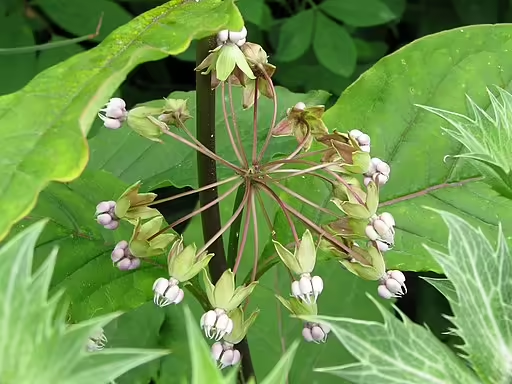
Facts about Poke Milkweed
- Native to Massachusetts: Yes, throughout(Kartesz 2015)
- Native to Boston, MA: Yes
- Natural Habitat: moist woods, roadsides, and edges of woods
- Height: 2 ft (0.6 m) to 6 ft (1.8 m)
- Flower Color: white to green with accents of rose, purple, or blue
- Flowering Period: May to August
- USDA Hardiness Zone: 3-9
Gardening with Poke Milkweed
In your Boston, MA butterfly garden, this milkweed needs part-shade to full shade and moist soil.
3. Swamp Milkweed (Asclepias incarnata), a Milkweed for Moist Soils
Previous mentioned as a companion to the poke milkweed, swamp milkweed likes wet soils in full sun or partial shade. However, in a garden setting, this species can handle drier conditions. Swamp milkweed is a fairly tall milkweed and needs space to spread out. A benefit is that it is fairly low maintenance. The fragrant pink flowers are a magnet for bees and other insects.
Swamp milkweed, as its name would suggest, is a lover of moisture. Whether it’s a sunny streamside, a moist meadow, or a rain garden, Asclepias incarnata is in its element. In Boston, if you have areas with consistently damp soil this plant can thrive. Its vibrant pink to mauve flowers are a magnet for a wide array of pollinators.
So, what companions appreciate similar conditions? Cardinal Flower (Lobelia cardinalis) would provide a stunning color contrast with its brilliant red flowers, also thrives in moist soils and attracts hummingbirds and bumblebees. Common boneset (Eupatorium perfoliatum) has white flowers that attract sweat bees, hoverflies, and most importantly, parasitoid wasps that can protect the milkweeds from aphids. Turtlehead (Chelone glabra) produces a unique hood shaped flower and is a host for the Baltimore checkspot butterfly (Euphydrayas phaeton). Golden alexander (Zizia aurea) for a splash of yellow in the early spring.
For plants that offer a different structure, consider Blue Flag Iris (Iris versicolor) or perhaps some of the moisture-loving sedges like Carex lurida or Carex crinita. Whatever plants are selected, make sure you select an area that is consistently moist.
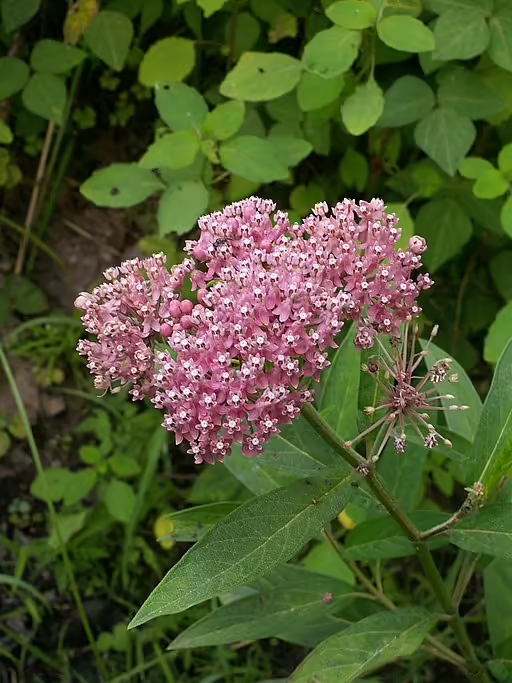
Facts about Swamp Milkweed
Asclepias incarnata subsp. incarnata and pulchra in Massachusetts
- Native to Massachusetts: Yes, throughout – pulchra, western counties – incarnata (Kartesz 2015)
- Native to Boston, MA: Yes, pulchra
- Natural Habitat: shores of streams, lakes, ponds, and other wetlands
- Height: 3 ft (0.9 m) to 5 ft (1.5 m)
- Flower Color: pink or red
- Flowering Period: July to September
- USDA Hardiness Zone: 3-9
Gardening with Swamp Milkweed
In your Boston, MA butterfly garden, this milkweed needs full sun to partial shade and medium to moist soil.
4. Few-flower Milkweed (Asclepias lanceolata), a Milkweed for Moist Soils
Few-flower milkweed is generally found along the southeastern coast of the United States and rare in the Mid-Atlantic. While not native to Boston, MA this milkweed can handle the plant hardiness zone of the area and likes moist to wet soils in full sun to part-shade. Along with butterfly weed, this is one of two orange to orangish milkweeds you can grow in the area.
Few-flower milkweed (Asclepias lanceolata), is often found in coastal plain habitats, savannas, and the edges of marshes. It certainly has potential for a Boston garden, particularly if you can offer it a spot with moist to wet, sandy, acidic soils and plenty of sun. Its slender form and striking reddish-orange flowers are quite captivating.
Given its preference for somewhat open, sunny, and moist conditions, consider pairing it with other coastal plain natives. Companion plants would be essentially the same as those for swamp milkweed above.
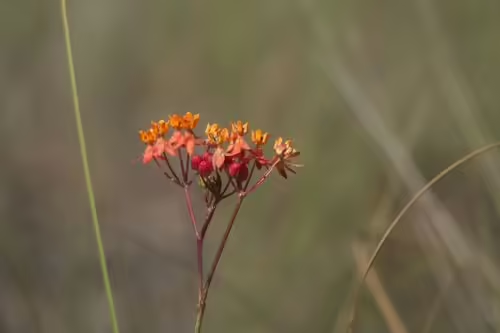
Facts about Few-flower Milkweed
- Native to Massachusetts: No (Kartesz 2015)
- Native to Boston, MA: No
- Natural Habitat: edges of marshes and wet areas of pine barrens and savannas
- Height: 2 ft (0.6 m) to 5 ft (1.5 m)
- Flower Color: yellow, orange, red
- Flowering Period: May to August
- USDA Hardiness Zone: 5-11
Gardening with Few-flower Milkweed
In your Boston, MA butterfly garden, this milkweed needs full sun to part-shade and loamy moist to wet soil.
5. Purple Milkweed (Asclepias purpurascens), a Milkweed for Moist Soils
If you are looking for a splash of purple in your garden while hosting monarch butterflies, this milkweed may be for you. In the wild this species is found in moist soils, but can grow in medium well-drained soils in a garden and can even tolerate droughts, if established. Be sure to have plenty of space for this plant, as it likes to spread and form colonies.
Purple milkweed (Asclepias purpurascens), with its rich, deep magenta flowers, is a truly stunning plant. It generally prefers sites with full sun to light shade and well-drained to medium-moist soils, often found in prairies, open woods, and glades. It can be a bit more particular than some other milkweeds. In Boston, MA, a spot with good drainage but some moisture retention would be key.
For companions, you might consider plants like clustered mountain mint (Pycnanthemum muticum), which feeds pollinators in the mid to late summer. Foxglove beardtongue (Penstemon digitalis), for long-tongued bees. Smooth Blue Aster (Symphyotrichum laeve), for late season color and a nectar source for native bees and migrating monarchs. Blue-stemmed goldenrod (Solidago caesia) to compliment the aster and provide pollen for oligoegethic bees. Finally, you can add bottle brush grass (Elymus hystrix) for pupation infrastructure and a unique texture. When planting this milkweed be sure your intended site offers a balance between sufficient moisture and good drainage that A. purpurascens appreciates.
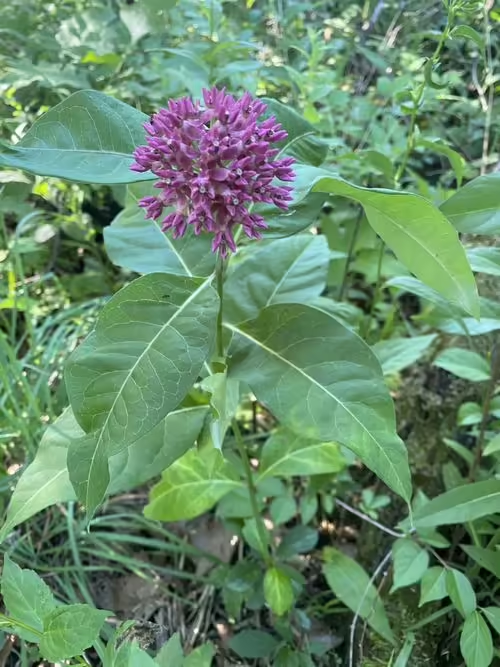
Facts about Purple Milkweed
- Native to Massachusetts: Yes, rare throughout (Kartesz 2015)
- Native to Boston, MA: Yes
- Natural Habitat: swamps, woodlands, meadows, and roadsides
- Height: up to 6 ft (1.8 m)
- Flower Color: purple, rose to pink, may mature to purple color
- Flowering Period: May to July
- USDA Hardiness Zone: 3-8
Gardening with Purple Milkweed
In your Boston, MA butterfly garden, this milkweed needs full sun to part-shade (more shade preferred) and moist well-drained soil. This species can also handle dry conditions.
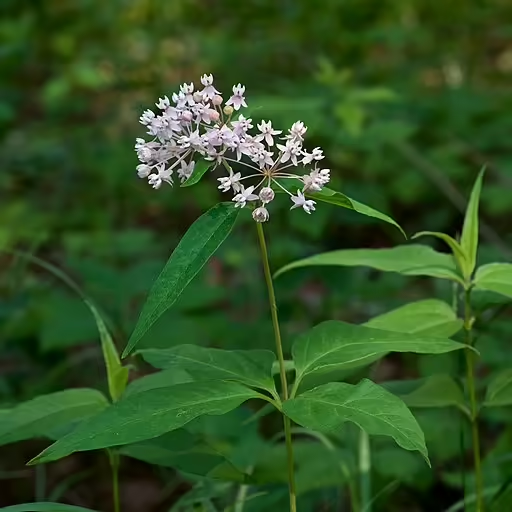
6. Four-leaf Milkweed (Asclepias quadrifolia), a Milkweed for Dry Rocky Soils
If you have dry well-drained soils and some shade, this milkweed may be a good choice for you. In the wild, this species can be found growing in dry woodlands. Four-leaf milkweed has clusters of white to pink flowers and can be grown from seed or cuttings.
This charming, smaller milkweed, four-leaf milkweed (Asclepias quadrifolia), is typically an inhabitant of dry to mesic upland woods, rocky slopes, and clearings, often in part shade. Its delicate pinkish-white flowers appear relatively early for a milkweed. So, in the Boston area, we’d be looking for a location that mimics these conditions.
What would thrive alongside it? Consider Wild Columbine (Aquilegia canadensis), which shares a love for well-drained soils and partial shade, and has early blooms for hummingbirds and queen bumblebees. Wild geranium (Geranium maculatum), which has a pink to lavender flower that provides nectar for short-tongued bees and hoverflies. Blue-stemmed goldenrod (Solidago caesia) that provides a mid to late season yellow color and nectar to native bees. White wood aster (Eurybia divaricata), which provides early season white flowers and a place for smaller butterflies to perch. Pennsylvania sedge (Carex pensylvanica) that provides pupation structure.
Facts about Four-leaf Milkweed
- Native to Massachusetts: Yes, throughout (Kartesz 2015)
- Native to Boston, MA: Yes
- Natural Habitat: roadsides and pastures that have disturbance
- Height: 1 ft (0.3 m) to 3 ft (0.9 m)
- Flower Color: white to pink
- Flowering Period: April to July
- USDA Hardiness Zone: 5-8
Gardening with Four-leaf Milkweed
In your Boston, MA butterfly garden, this milkweed needs full sun to part-shade and dry rocky soils.
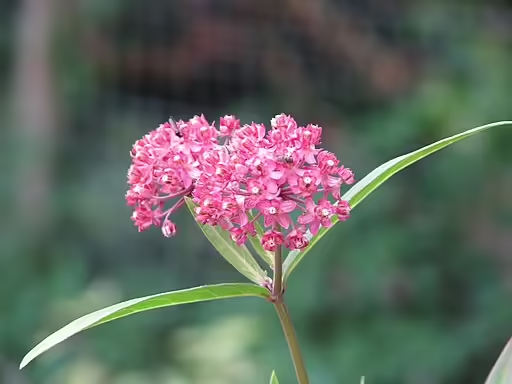
7. Red Milkweed (Asclepias rubra), a Milkweed for Moist to Wet Soils
Another milkweed of moist soils, this milkweed is often found in full sun. However, in a garden setting it can be grown in medium soils. The pink to red flowers bloom in the spring and summer. The small size could make this plant suitable for containers.
Asclepias rubra, or Red Milkweed, is an interesting milkweed. It typically inhabits bogs, pocosin edges, and moist pine savannas, primarily in the coastal plain of the southeastern U.S. In the Boston, MA area, this species would require a dedicated spot with consistently moist to wet, acidic, sandy or peaty soil, and full to partial sun.
Are you cultivating such specific conditions? If so, its companions would be other acid-loving, moisture-tolerant plants. This could include Virginia meadow beauty (Rhexia virginica), which attract native bumblebees. Bog goldenrod (Solidago uliginosa) that provides late season nectar for butterflies and bees in wetlands. Pink tickseed (Coreopsis rosea) that provides nectar to short-tongued bees and small skipper butterflies. Slender blue flag (Iris prismatica), a nectar plant for long-tongued bees. Finally, rough wood aster (Eurybia radula), a plant that continues to provide nectar after the milkweed has gone to fruit.
Facts about Red Milkweed
- Native to Massachusetts: No (Kartesz 2015)
- Native to Boston, MA: No
- Natural Habitat: bogs, meadows, and pine barrens
- Height: 1 ft (0.3 m) to 3 ft (0.9 m)
- Flower Color: pink, purple, red to lavender
- Flowering Period: May to August
- USDA Hardiness Zone: 6-9
Gardening with Red Milkweed
In your Boston, MA butterfly garden, this milkweed needs full sun to part-shade and wet organic soils.
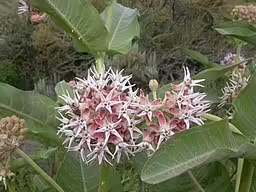
8. Showy Milkweed (Asclepias speciosa), a Milkweed for Medium to Well-drained Soils
Showy milkweed is a commonly planted milkweed in butterfly gardens around the United States. It is a small to medium sized plant, making it suitable for containers, but whether planted in the ground or in a container, it needs good drainage and full sun. While not native to Boston, it can handle the plant hardiness zone of the area.
Asclepias speciosa, or Showy Milkweed, is a magnificent plant that is often a featured plant in butterfly gardens in the US. From an ecological perspective, it’s primarily a species of the western and central United States, thriving in prairies and open areas. In Boston, MA it is best considered a plant for container gardens due to it being far from its native range. However, it can also be planted in open gardens.
Suitable companion plants to showy milkweed include clustered mountain mint (Pycnanthemum muticum) that provides nectar to most garden visitors. Wild bergamot (Monarda fistulosa), a mid to late summer flowering plant that provides nectar for bumblebees and sphinx moths. New England Aster (Symphyotrichum novae-angliae), a late season bloomer and nectar source. Blazing star (Liatris spicata), a late summer nectar powerhouse. Indiangrass (Sorghastrum nutans), a grass that provides pupa infrastructure and fall color.
Facts about Showy Milkweed
- Native to Massachusetts: No (Kartesz 2015)
- Native to Boston, MA: No
- Natural Habitat: roadsides, fields and woodlands
- Height: 1 ft (0.3 m) to 3 ft (0.9 m)
- Flower Color: purple to pink
- Flowering Period: April to June
- USDA Hardiness Zone: 3-9
Gardening with Showy Milkweed
In your Nantucket County, MA butterfly garden, this milkweed needs full sun and medium to well-drained soil.
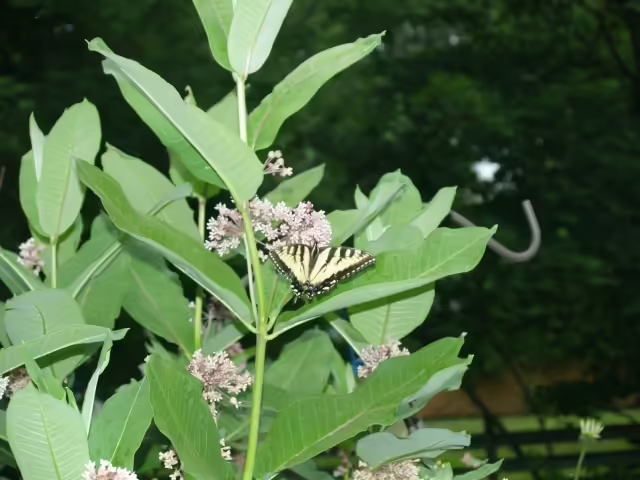
9. Common Milkweed (Asclepias syriaca), a Milkweed for all Conditions
This milkweed is one of the most common in the midwest and northeastern United States. The large leaves provide ample feeding opportunities for monarch butterflies. Common milkweed is a plant for all conditions and can spread by seed or rhizomes, so it should have some space in the garden.
When people think of milkweed, it is often the ubiquitous and invaluable Common Milkweed. Common milkweed is a standard for pollinators and a critical host plant for Monarchs. It’s adaptable, thriving in full sun and a range of soil types, from sandy loams to clay, though it does prefer well-drained conditions. It can be quite vigorous, so we must ask: are we prepared for its potential to spread?
For companions in the Boston area, think of other resilient, sun-loving perennials. This include those listed for showy milkweed above with the addition of switchgrass (Panicum virgatum). The key is to plant the milkweed where its spreading nature is an asset or where it can be managed such as large field.
Facts about Common Milkweed
- Native to Massachusetts: Yes, throughout (Kartesz 2015)
- Native to Boston, MA: Yes
- Natural Habitat: fields, pastures, roadsides
- Height: up to 6 ft (1.8 m)
- Flower Color: pink, greenish-purple, greenish-white, to white
- Flowering Period: June to August
- USDA Hardiness Zone: 3-9
Gardening with Common Milkweed
In your Boston, MA butterfly garden, this milkweed needs full sun to part shade and can handle nearly all soil conditions.
10. Butterfly Weed (Asclepias tuberosa), a Milkweed for all Conditions
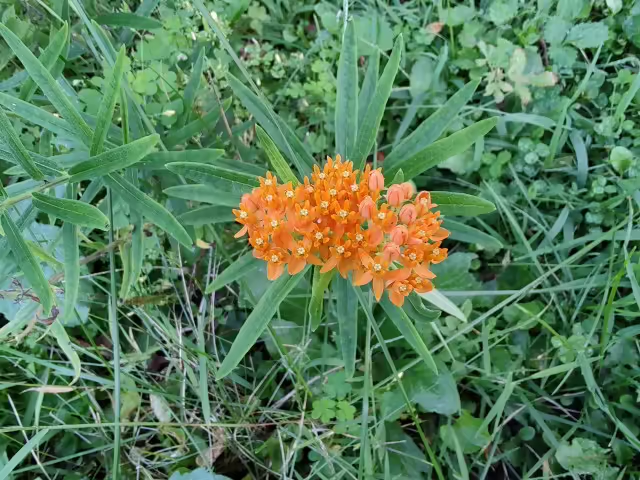
Butterfly weed is one of three milkweeds in the United States that has an orange colored flower and is one of two that does have a milky sap. The orange flowers this is plant are iconic and make it a favorite as well as its abilities to handle most garden conditions.
Butterfly Weed (Asclepias tuberosa) is a truly spectacular plant with its brilliant orange (sometimes yellow) flowers, and it’s a fantastic choice for Nantucket’s sun-baked, sandy, and well-drained soils. It’s quite drought-tolerant once established. What companions would suit this sun-lover? Consider pairing it with Lance-leaved Coreopsis (Coreopsis lanceolata) for a cheerful yellow-orange combination.
Other companions can include New England blazing star (Liatris scariosa var. novae-angliae), a plant that provides late season nectar. Narrowleaf mountain mint (Pycnanthemum tenuifolium), a plant that provides habitat for parasitoid wasps to keep aphids in check. Yellow wild indigo (Baptisia tinctoria), a yellow-flowering species in the spring, that can provide nitrogen for the garden and is a host plant Ensuring excellent drainage is paramount for A. tuberosa.
Facts about Butterfly Weed
Asclepias tuberosa subsp. tuberosa in Massachusetts
- Native to Massachusetts: Yes, throughout (Kartesz 2015)
- Native to Boston, MA: Yes
- Natural Habitat: fields, roadsides and open woods
- Height: 1 ft (0.3 m) to 3 ft (0.9 m)
- Flower Color: orange
- Flowering Period: June to October
- USDA Hardiness Zone: 3-9
Gardening with Butterfly Weed
In your Boston, MA butterfly garden, this milkweed needs full sun and can handle nearly any soil type.
11. Red-ring Milkweed (Asclepias variegata), a Milkweed for Dry Sandy Soils
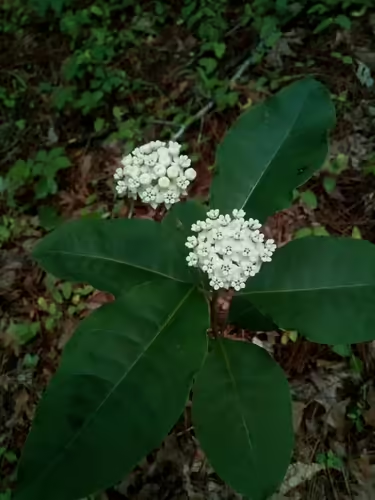
Red-ring milkweed an interesting flower that is white with a red or purple band. This makes the flower an interesting conversation piece and can be grown in full sun and well-drained soils. In the wild, this milkweed is found in thickets and roadsides.
Asclepias variegata, sometimes known as White Milkweed or Variegated Milkweed, is quite handsome with its white flowers and is often tinged with purplish rings. This milkweed typically prefers dry to mesic soils in open woods, woodland borders, or clearings, often in part shade but can tolerate more sun if moisture is adequate. On Nantucket, a spot with well-drained soil and some protection from the most intense afternoon sun might be ideal.
Good companions in the Boston, MA area could include clustered mountain mint (Pycnanthemum muticum), to attract beneficial wasps to guard against aphids. Hairy beardtongue (Penstemon hirsutus), to have lavender flowers and long-tongued bees. Wild columbine (Aquilegia canadensis), to attract hummingbirds. Blue wood aster (Symphyotrichum cordifolium), for an late season nectar source for migrating monarchs and other insects. Finally, for some texture, bottlebrush grass (Elymus hystrix) is a good addition. Generally, you want to aim for a woodland edge habitat.
Facts about Red-ring Milkweed
- Native to Massachusetts: No (Kartesz 2015)
- Native to Boston, MA: No
- Natural Habitat: thickets and roadsides
- Height: 1 ft (0.3 m) to 4 ft (1.2 m)
- Flower Color: white with a ring of purple to red at the base
- Flowering Period: May to July
- USDA Hardiness Zone: 3-9
Gardening with Red-ring Milkweed
In your Boston, MA butterfly garden, this milkweed needs part-sun to light-shade and dry sandy or rocky soils.
12. Whorled Milkweed (Asclepias verticillata), a Milkweed for Medium to Dry Soil
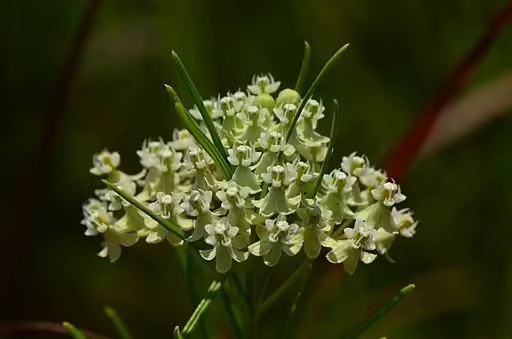
Whorled milkweed has narrow-leaves providing an interesting textual contrast to gardens. If you have average to dry soils and full sun to part-shade this species could live in your garden.
Whorled Milkweed (Asclepias verticillata) is a delightful, fine-textured plant that thrives in full sun and dry to medium, well-drained soils, often in prairies, glades, and open disturbed areas. Its slender profile and greenish-white flowers are attractive to a wide range of smaller pollinators.
Given its preference for leaner conditions, it would pair wonderfully with some of the smaller native grasses like Poverty Oat Grass (Danthonia spicata) or Purple Lovegrass (Eragrostis spectabilis), which adds late-season color. Aromatic Aster (Symphyotrichum oblongifolium) could provide late-season nectar and thrives in similar sunny, drier spots. For a very low companion, perhaps Field Pussytoes (Antennaria neglecta). The fine texture of A. verticillata provides a wonderful contrast to broader-leaved plants.
Facts about Whorled Milkweed
- Native to Massachusetts: Yes, rare and scattered in the eastern and western counties (Kartesz 2015).
- Native to Boston, MA: Yes
- Natural Habitat: meadows and fields
- Height: 1 ft (0.3 m) to 3 ft (0.9 m)
- Flower Color: green to white flowers
- Flowering Period: May to September
- USDA Hardiness Zone: 3-9
Gardening with Whorled Milkweed
In your Boston, MA butterfly garden, this milkweed needs full sun to part-shade and medium to dry soil.
13. Green Comet Milkweed (Asclepias viridiflora), a Milkweed for Medium to Dry Sandy Soils
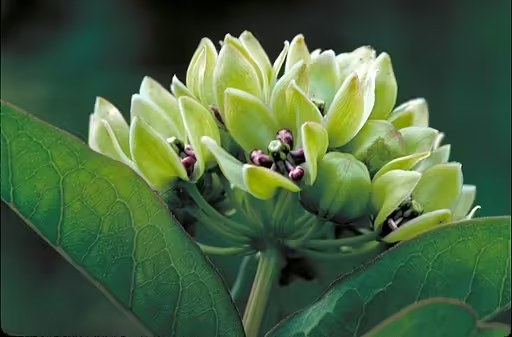
Green comet milkweed is a milkweed having two different flower colors depending on the age. Thriving in full sun to part shade and average to dry sandy soils, this could be an excellent addition to your garden and provide leafy interest.
Also known as Green milkweed, Asclepias viridiflora is typically found in prairies, glades, and open woodlands, preferring full sun and dry to mesic, often calcareous soils, though it can tolerate sandy and gravelly sites as well. Its greenish, uniquely shaped flowers are quite intriguing. In the Boston, MA area, finding a spot with full sun and excellent drainage would be crucial.
Good companions would be those that don’t mind these drier, leaner conditions. Consider Hoary Vervain (Verbena stricta), a tough plant with upright purple flower spikes. Spotted Bee Balm (Monarda punctata) is another excellent choice for sandy soils, attracting a fascinating array of wasps and bees. Little Bluestem (Schizachyrium scoparium) would again be an appropriate grass, reinforcing that prairie-like feel. The subtlety of its green flowers lends itself to being planted in places it where it can be appreciated up close.
Facts about Green Comet Milkweed
- Native to Massachusetts: No (Kartesz 2015)
- Native to Boston, MA: No
- Natural Habitat: meadows and fields
- Height: 1 ft (0.3 m) to 3 ft (0.9 m)
- Flower Color: green, aging to yellow with a purple tinge
- Flowering Period: June to August
- USDA Hardiness Zone: 3-9
Gardening with Green Comet Milkweed
In your Boston, MA butterfly garden, this milkweed needs full sun to part-shade and medium to dry soil.
When selecting your Boston, MA milkweed, be sure to make sure that it grows in your zone and habitat.
Books where you can find out more about Monarchs and Butterfly Gardening in Boston, MA
- Crow, Garrett C. and C.B. Hellquist. 2023. Aquatic and Wetland Plants of Northeastern North America. University of Wisconsin Press. 952 pp.
- Cullina, William. 2000. The New England Wild Flower Society Guide to Growing and Propagating Wildflowers of the United States and Canada. Houghton Mifflin Harcourt. 336 pp.
- Fengler, Jeff. 2016. Butterflies of Southern New England Connecticut, Massachusetts, and Rhode Island. Quick Reference Publishing, Inc. 12 pp.
- Freeman, Stan. 2016. The Natural History of Eastern Massachusetts. Hampshire House Publishing Co. 124 pp.
- Lorimer, Uli. 2022. The Northeast Native Plant Primer: 235 Plants for an Earth-Friendly Garden. Timber Press. 252 pp.
- Playfair, Susan R. 2014. America’s Founding Fruit: The Cranberry in a New Environment. University Press of New England. 240 pp.
Affiliate Disclosure: When you click on links to various merchants on this site and make a purchase, this site can earn a commission at no extra cost to you. Affiliate programs include, but are not limited to, the eBay Partner Network, BetterWorldBooks, and Blackwell’s Books.
References for Boston, MA Milkweeds
- Kartesz, J.T., The Biota of North America Program (BONAP). 2015. North American Plant Atlas. (http://bonap.net/napa). Chapel Hill, N.C. [maps generated from Kartesz, J.T. 2015. Floristic Synthesis of North America, Version 1.0. Biota of North America Program (BONAP). (in press)].